Zuzanna Ginczanka (born in 1917 as Zuzanna Gincburg) wrote her first poems at the age of 4. By 14, she had found her mature voice. At 19, she was a rising star in Warsaw’s avant garde.
At 27, she was murdered by the Nazis.
Two years before her death, she narrowly escaped capture by the German police, or “Schupo.” She processed her experience in this remarkable poem.1
Non omnis moriar – my noble estate, My fields of tablecloth and expansive sheets, My steadfast wardrobe bastions, still replete With pastel-colored dresses will outlive me yet. I left no successor to inherit these Jewish things. May your hand then reach, Mrs. Chomin of Lvov, brave wife of a snitch, A Volksdeutcher’s2 mother, for them if you please. May they serve you and yours. For why should it be Outsiders? Neighbors, you – that’s more than empty name. I still remember you, and when the Schupo came, You remembered me. Reminded them of me. May friends of mine sit down and raise their jugs To drink away my death, toast the things they’ll own: The platters and candles, tapestries and rugs. May they drink all night, and at the break of dawn May they search for gold and for precious stone In mattresses, couches, and duvets in turn. Their work will go so fast, it will almost burn, While billowed horsehair, seagrass, eiderdown, And clouds from gutted pillows will drift gently Down to their arms. And then my blood will cling To fiber and to fluff and form the wings Turning those in seventh heaven into angels.
It’s one thing for Horace, who lived to 56, to claim “non omnis moriar” (“not all of me will die”)-another for a 25-year-old Jew hiding in Nazi hell. The poetry Horace left behind offered comfort; Ginczanka’s material possessions are only a threat. If Mrs. Chomin hadn’t hoped to pillage Ginczanka’s “Jewish things” after her death, if jealousy towards her neighbor’s relative wealth hadn’t turned to spite, Ginczanka wouldn’t have needed solace in the first place.
I’m haunted by those pastel-colored dresses. I wonder if Ginczanka remembered, when writing that line, how she had used the image of the dress in “Virginity.” In this poem, we, women,
in cubes of peach-tinted wallpaper, as hermetically sealed as a steel thermos, ensnared to our necks in dresses, carry out civilized conversations.
The dresses symbolize her innocence and youth, but also the curse of her notorious beauty. Before the war, this meant unwanted male attention and female jealousy. Now, she carried the burden of an unforgettable face, the utter impossibility of passing for an “Aryan.”
Nothing is as worthy of jealousy as it seems; jealousy itself, morphed to malice, ensures that.
Knowing that doesn’t stop the jealousy. Even I feel it: jealousy for Ginczanka’s talent, beauty, heroism. Even for her martyrdom.
I want to be a hero too. Instead, I’m beset by uncertainty, flitting from one pursuit to the next, always wondering whether I could make a bigger difference, devote myself to something more important. Ginczanka had no such choice; hiding away from the Nazis, all she could do was the thing she loved most: write – and that was enough to turn her into an angel.
The bitter sarcasm of her poetry brings me to my senses: I, and only I, am the enviable one.
More than half of the population of Ginczanka’s hometown of Równe (now Rivne, Ukraine) was Jewish. Still, Christmas was the holiday for which her grandmother would decorate the family storefront. Each year, she would dress up her beautiful granddaughter, attach wings to her, and place the angel behind the glass display. Local children would stand on the other side of the glass, rooted in place by the spell of Zuzanna’s beauty.3
And so her childhood prefigured her death: transformed into an angel against her will, locked inside a small room on the other side of reality, hoping for invisibility behind a glass wall.
Did she return to this memory when writing “Non Omnis Moriar”? Was she using her blood as a final act of defiance, sticking her wings onto her tormentors? “Here, you be the angel, see how much you like it!”
Juliusz Słowacki
Ginczanka’s poem includes several references to Juliusz Słowacki’s “My Last Will.” One of Poland’s great Romantic bards, Słowacki wrote at a time when Poland was absent from world maps, partitioned by Russia, Prussia, and Austria. The poet, who suffered from tuberculosis, “leaves no successor,” so he bequeaths his writing to the Polish people. He hopes it will inspire them to keep the flame of Polish culture alive and to, if necessary, fight and perish for the sake of independence “like stones cast by God onto the barricade.”
It’s a powerful and bittersweet thing to see Ginczanka claiming this Romantic lineage. Though she had called Poland her home for almost her entire life and inhabited the Polish language as comfortably as anyone, she may have never held a Polish passport.4
Fleeing pogroms, her parents had brought her to Poland during the first few years of her life. At home, she spoke Russian, but inspired by the rich poetic culture of inter-war Poland, she chose Polish as her written language. In “Non Omnis Moriar,” she is, like Słowacki, taking it upon herself to pass on the torch of Polish culture; the republic is, once again, erased from the map. But she’s doing something else too: sketching a new map, a map of a country that would claim her as its own. A country of culture, of compassion, of tolerance.
When Ginczanka asks “For why should it be outsiders?” she’s surely paraphrasing something Mrs. Chomin would have said. Of course, for the snitch it is the Jews who are outsiders – but Ginczanka willfully misunderstands her neighbor. If Poland is the only place she ever called home, how could she be an outsider?
A better Christian than Mrs. Chomin, she models loving your neighbor like yourself. A better Pole, she knows the country’s literary canon by heart (I doubt there’s space in her hideaway for volumes of Słowacki!).
Of course, none of that makes any difference.
The image of the angel is also borrowed from Słowacki, who closes his poem by prophesying that that the force of his poetry will turn “bread eaters” – complacent Poles unfazed by the country’s partition – into angels.
Ginczanka’s angels are much more enigmatic. Her death turns her snitches into what passes for angels in the topsy-turvy world of Nazi-occupied territories: obedient subjects. Appealing to Mrs. Chomin’s withered conscience, Ginczanka reminds her that it is her own blood that makes this illusory honor possible.
If Mrs. Chomin is an angel, she is an angel of death.
The righting of the topsy-turvy world came too late for Ginczanka. But just as she prophesied, her poem lived on.
In 1948, Zofja Chomin was sentenced to four years in prison for collaborating with the Nazis. The evidence? Among others, “Non Omnis Moriar” – one of the only poems ever used as testimony in court.
Ginczanka’s early poem, “Grammar,” features an unforgettable simile:
And pronouns are as confidential as flowers as the minuscule, minuscule roomlets in which you live in secret evasion.
The “roomlets” hold a pair of lovers, hidden in the anonymity of “you” and “me,” but they’re also the shelter Ginczanka would find in language – the only place that would hold her.
“Non Omnis Moriar” is a tour de force of poetic control. Ginczanka twists Mrs. Chomin’s words “why should it be outsiders?” for her own purpose and returns the wings which her oppressors forced on her.
It is, of course, control only on paper – the only type of control she knew in her short life. The plot is made by the powerful; all she can do is choose the words in which she tells her story. The words make a difference, yes – but by then all of her is dead.
In the “Grammar” of Ginczanka, a woman and a Jew, there are no verbs.
[1] All translations are mine. [2] The Volksdeutche were subjects of Nazi-occupied territories who claimed (or were pressured to claim) German heritage and received special treatment as a result. [3] Anecdote taken from Izolda Kiec’s biography Ginczanka. Nie Upilnuje mnie nikt. [4] Izolda Kiec cites an acquaintance of Ginczanka’s on this point, but also expresses some scepticism, since Ginczanka’s own mother did posses a Polish passport.
Processing…
Success! You're on the list.
Whoops! There was an error and we couldn't process your subscription. Please reload the page and try again.
“There are two kinds of person. Two ways to be. Either you turn towards others — or you turn inwards, digging yourself deeper and deeper into the lonely pit of your mind. It’s like directions on a screw. See what I mean?”
I think I do. The ways of turning the screw are perfect opposites. One direction undoes the other, and only one of them is worth anything.
“I can tell that you’re the kind who turns towards others.”
This is the first time in my life I have shared a coffeeshop table with a stranger. Just a week earlier, I was living entirely in my head, weighed down by overwhelming shyness. My screw had been turning the wrong way.
But just at this moment, this stranger whom I met maybe 10 minutes before is right. It’s like a screw; once you know which way it needs to go, nothing is easier than switching direction.
This is the story of how I ended up in that café. If you struggle with social anxiety, I hope it helps you make your way to equally exhilarating places.
It all began 18 months before, when I decided to do something about my shyness. Following an approach borrowed from cognitive behavioral therapy (CBT), I made a list of intimidating social tasks and ranked their scariness on a 10-point scale. Some examples:
4. Saying things to myself out loud in an empty room 6 Terminating a conversation with a friend 7 Going to a party where I know almost no one (in US) 9 Taking a taxi on my own in Dakar (note that at the time I was living in Senegal and spoke almost no French) 9 Making a phone call to a stranger
Slowly, I made my way up the scale, choosing activities from the level just outside my comfort zone until that became the new comfort.
Nine months in, I’d made some impressive progress. As you can see from the list, I had a pretty severe phone phobia. I knew that if I just kept picking up the phone, I could get over the fear — but what was shocking was just how fast this happened. After each call, the scariness of the next one plummeted, and after a grand total of five calls I started preferring picking up the phone to sending an email for e.g. customer support issues.
But despite the early success, eventually I exhausted this approach. Structured interactions like ordering coffee, phoning my bank, even giving a talk became a piece of cake. What I was stuck on was conversations. I still found talking to strangers terrifying. Somehow, ranked lists didn’t help with that.
The scariness ranking was the first step on my path out of shyness. The second step was having my partner almost break up with me.
A mere week before that coffeeshop conversation, I was vacationing back in Senegal, where my partner Ben’s company is based. I’d been spending my time thinking, or trying to think, about my future, an activity which Ben and I call “staring into the abyss.”
I would be getting my PhD soon, and I needed to make some sort of post-graduation plan. I knew I didn’t want to work in academia. What I did want was anybody’s guess. I loved painting and writing, but imagining those things stretched before me for decades felt vertiginous, empty, lonely. Instead, I mostly looked away, drowning the days in mindless video games, promising myself that tomorrow I’d be brave enough.
And then I finally do feel brave. Ben has suggested that I start by thinking about my values; I open a career guide which might help. It instructs me to imagine an ideal day at work, so I visualize us sitting in our plant-filled apartment, Ben and I at desks on opposite sides of the living room. I’m polishing words, or threading a dozen ideas together until I get to the bottom of some experience. Or I’m in my studio, following my feelings until they find their most intense, most unified expression.
When Ben gets back from work, I proudly announce that I’m ready to talk about the abyss.
“Great, what are your values?”
“Expressing my experiences as vividly as possible. You know, getting to the bottom of my feelings, doing research if necessary, writing or painting about it.”
I regret the words as soon as they come out of my mouth. I think of Ben’s own core value: making the world a better place. Of how this guided his job choice, how his face lights up when he talks about the difference he’s making. How must I sound to him?
His expression is unbearably blank. My terror writes the worst across that blankness: distance, disappointment, disdain. He is, he remains, silent: stubbornly, terrifyingly silent.
I can’t take it anymore. “You seem disappointed,” I hazard.
“Yeah… Our values are… so different.”
The way he says it, the way I feel it, is the deepest abyss I’ve ever faced. It’s the feeling of standing naked in the darkness, alone.
It’s the feeling of being unloved.
He confirms my worst fears: “It’s very important to me that I date someone whose values I respect.”
I’m right at the edge of the abyss. It’s every insecurity I’d ever felt in this relationship at once. It’s wondering why he would date me in the first place. It’s looking in the mirror and finding my worst fears: selfishness, greed, self-importance. Worthlessness.
As if hearing my thoughts, Ben softens. “Look, I admire a lot about you. Your writing and your painting are amazing. You’re bold and ambitious. You never stop pushing yourself.”
“Pushing myself up the wrong tree,” I think bitterly. “Ambitious, yes; about something which is at best pointless, at worst selfish.”
I want to roll time back, swallow all my words. I want to press undo. It’s too late; I’m in freefall.
A second passes, an eternity. I survive.
At the bottom of the abyss, I hit my values.
Helping others. Connecting. Making the world a better place. It really is that simple. “Expressing my experiences?” That’s just a pale tremor, a ghost. Something I enjoy doing, nothing more. What I feel tugging at my heart with unmistakable insistence is only this: morality. The weightiest thing; the thing that binds us all.
Of course, “I want to make the world a better place” is just what I’d say to stop Ben from breaking up with me, whether or not I actually believed it. And since I haven’t actually been trying to improve anybody’s life, I have basically no credibility. Still, I try to explain.
“I just realized that I actually want to help other people, much more than I want to create things… It’s just that I’m introverted. I like people in theory; in practice they overwhelm me. I’m hopeless at group interaction. How can I help anyone other than indirectly, through writing or painting?”
Ben thinks for a moment, then asks: “Remember that caterpillar you saw at the meditation retreat?”
I do. Letting go of my disgust, which turned to overwhelming awe. The giant mandible, the legs, the dew-strewn, fuzzy back — all beautiful, all miraculous.
“What would it take for you to see people the way you saw that caterpillar?”
I had done that before. On my best days, a smile shared with a stranger brings me face to face with the precious particularity of a life no less worthy than my own. But how would I let such experiences guide my life?
“I don’t know… I’m shy. I’m introverted,” I repeat.
For the first time in this conversation, Ben meets my eyes. “I want to grab you and shake you and tell you: you can be so much more awesome than you think.”
The way he says it, I know we’ll be okay.
The next day, I meditate for four hours (almost) straight. Day after that, I go to a café.
The thought: “How can I make this barista’s day better?” pops into my head. I test out the intention. I look in his eyes. I smile. I speak up.
As I sit down, it occurs to me that during that entire interaction, I hadn’t experienced a single moment of self-consciousness. I spoke French without thinking about it, without worrying about my accent or grammar. I made eye contact without feeling exposed.
I think I understand: It’s literally impossible to be self-conscious while focusing fully on another person. My attention can only be in one place at a time.
This might be obvious to you. In fact, you might have heard this fact trotted out as a neat trick for eradicating shyness: focus on helping your interlocutor and watch your anxiety fall away.
Sounds great in theory, but in practice I found this advice completely unfollowable. A typical conversation would go something like this:
Acquaintance: I’m feeling down today… Me (thinking): Here it is! A chance to focus attention outwards! A chance to vanquish self-consciousness! This time won’t be like last week… No awkward silence at all… Last week… Gah, that really sucked… Nonono, stop, stop, STOP! Quick! Ask a question! Acquaintance: Blah blah blah blah… Me (thinking): @#$%!
When I realized that my fundamental goal wasn’t to vanquish shyness, but simply to help, my conversations started sounding more like this:
Acquaintance: I’m feeling down today… Me: Want to talk about it?
It’s that easy.
Baba Ly in his studio.
A few days later, a friend and I are at Village des Arts, an artists’ colony in Dakar. Baba Ly is telling us about using abstract art to express his emotions. His gaze drifts upwards, towards a vast utopia seemingly hanging from the ceiling. He speaks of inner riches, of going beyond the surface. This is the art for which he stays up at night.
During the day, he makes paintings of stylized women in colorful robes, with children on their backs and baskets on their heads — the “African art” that pays the bills. At night, he pours out his soul.
I hang on to his every word. I ask follow-ups. 18 months before, I spoke maybe 50 words of French. I had nightmares about having to direct a taxi driver. Now, the questions pour out of me with no sense of linguistic mediation.
Later, I realize I made some dreadful grammatical mistakes. As in, “I knowed”-level dreadful. Not too long ago, they would have mortified me, but this time, that doesn’t matter at all. I only want to know Baba Ly’s story, and my bungled grammar is perfectly adequate to that task.
I know two things about my values now: I want to help people, and I want to learn their stories, catch glimpses of their intricate interiors. Bear witness to their humanity.
That’s why I read so many biographies, interviews, novels, poems. That’s why I look at art, feel compelled to translate, in writing, that art to human experience.
For years, I thought that was the end of it. I was doomed to mediated experiences. As an introvert, I was horrible at getting strangers to open up. At best, I could learn the stories of long-time friends. Most people — especially extraverts — were bad about talking about their feelings, anyway. Better to turn to the poets. Better to turn to my own inner life.
Now, three minutes after meeting Baba Ly, the artists’ village is a vast utopia, made up of inner worlds I can’t wait to visit.
Simply realizing that I want to help others and learn about their stories cured me of 80% of my social anxiety. You may be thinking: that’s all fine and dandy. But what if I don’t want to help others? What if I just want to be less shy so that people like me?
If so, I commend you! Just realizing what you do and don’t want takes you 80% of the way there. And if what you want is selfish, it’s especially hard to be honest with yourself!
In fact, figuring out that I, too, want people to like me was an important part of my journey. I used to be convinced that I didn’t give a damn what most people thought of me, didn’t stoop so low as a need to be liked. (So why was I shy? New people were just… intrinsically scary!)
Last October, I went on a ten-day meditation retreat. Walking silently around the grounds of the meditation center among the other participants, I noticed something shocking. I had the thought “What are they thinking about me?” literally every time I passed by another person. So if you already know that you care about others’ opinions — good job! You’re further along than I was 6 months ago.
But also: I want to grab you and shake you and tell you “You can be so much more awesome than you think!” You do want to help others. Somewhere at the core of your being is a deep well of love. If only you knew how powerful it is! How powerful you are.
Your desire to be liked is a boulder blocking that well. You found the boulder — hooray! Now it’s time to push it aside.
But how do you do that? For me, meditation has been key. The traditional kind where you focus on your breath, mere calmness and concentration, was enough to help me catch glimmers of my better self.
Beyond that, loving-kindness meditation has been invaluable. In this practice, you make a series of wishes. (What follows is going to sound cheesy, but bear with me! Cheesy or not, it’s made a dramatic difference to my life.) Those can take many forms, but the one I use is: “May I be free from suffering. May I be free from ill will. May I be filled with loving-kindness. May I be truly happy.” With each wish, I conjure corresponding experiences. Hiking through flower-filled meadows. The endless benevolence of a baby’s smile. I search for memories until they are so vivid that my desire for them becomes palpable. Then I direct the wishes towards other people, taking loved ones, acquaintances, strangers, groups of people, and difficult people in turn. Once again, I make sure to generate memories which recreate these feelings, and stay with one wish until it rings true.
That last part is harder than it sounds. More often than not, I conjure up bliss washing across an acquaintance’s face only to feel a pang of dislike. I sit with the feeling until something – usually a memory – bubbles up from underneath it. Once, I found myself swept back to a moment from middle school. “You’ll never get married if you don’t wear makeup,” my friend (frienemy?) had told me. It all came flooding back: anger, then defiance, then the resolve to prove her wrong. Years of wearing my unpainted face as a badge of honor. Bingo. I was trying to wish happiness onto someone who wore makeup – but a part of me believed such people didn’t evendeserve joy!
This happens again and again. To my horror, I struggle to generate honest wishes for minorities, for older people, for those who superficially remind me of childhood bullies… Those are upsetting truths to discover about myself — but each time, simply bringing my biases into consciousness is enough to (at least temporarily) turn the truth to falsehood.
With every day of practice, I’m better able to see other people’s humanity — and I become more and more confident that seeing and honoring that humanity is something I deeply desire.
I know you do too.
Back in Boston, I decided that joining a CBT-based social-anxiety support group would help me on my quest towards gregariousness. Instead, the sessions made me feel anxious… about not having any recent shy behaviors to report.
But before I accepted that I had already cured my own shyness and quit, I gained some insight into why CBT had been a dead end for me. The therapist kept trying to convince us that it would be in our own interest to work on our anxiety. When the participants described avoiding parties or sitting dejectedly in a corner, he’d chime in: “Wouldn’t it be great if you could join in the fun and have conversations? You’re missing out, aren’t you?”
Thinking about what I’m missing out on only makes me feel worse. Like that time I went out dancing, fell out of step during the first dance, watched the second with tear-filled eyes, and ran out at the third. But when I think about what the other people at the party are missing out on, think about how I might help them have fun, I start feeling the desire to join in.
The therapist’s question was misplaced in another way too: a part of me didn’t think it was missing out on anything.
In the days when I was theoretically aiming to be more sociable but wasn’t really doing anything about it, I would state that aim in the voice of a popular middle-school kid. “You really should be more social, Eve.” But I wasn’t exactly an admirer of those kids! On some level, I thought it was important to be sociable. On another level, I believed that that way madness, nightclubbing, and sororityhood lies. Becoming more outgoing would be the first step down the slippery slope towards a life of binge-drinking.
And then there I was, my head mushy with alcohol, my words slurred and loud. It was past my bedtime, too. I was loving it.
I was out at a bar with a group of graduate students from my department, commiserating about the frustrations of grad life. For the first time, I was opening up about feeling like I didn’t belong. For the first time, I felt like I belonged. I felt connected.
Ironically, it was when I gave up aiming for connection that I found it. When I first stated my values to Ben, “connection” was on the list. By now, my conversational goal had shifted from “connecting” to “learning others’ stories.” This had two positive effects. First, I didn’t set my sights too high, didn’t conclude that an interaction was failed simply because we didn’t become best friends. Second, I was open to interactions with a much larger pool of people.
I had assumed that connection meant finding your twin in a crowded room. Armed with a detailed checklist of everything you know about your soul, you tick the boxes that others have on their lists. Soulmates are the ones with lists most similar to yours.
What if I know nothing about my soul? What if my checklist is a series of questions? What if connection is adding to each other’s lists — union, not intersection?
At the bar that night, we needed the humor and honesty that alcohol can bring. Look, my “drunk” is one beer and my bedtime is 9:30 PM. I wasn’t headed down any slippery slopes. But it was a big shift. As long as I was trying to be sociable, without asking why I wanted that in the first place, I remained torn. I paid lip service to gregariousness, but in my inner narrative the quiet nerd was the hero occupying the moral high ground, and I would balk at any activities that bore even superficial resemblance to the behavior of a sorority girl. It was only once I realized when and why sociability was valuable that I could reach for it even when it wore a cloak of sororityhood.
Shifting my focus to helping others has dramatically improved my experience of large-group interactions. I used to be filled with dread during conversations I found uninteresting. I was uninterested, so I had nothing interesting to contribute; I was bored, therefore I was boring. I didn’t belong.
Now, If I’m bored but everyone else is engaged, they don’t need my help! Since my primary aim is helping others have fun, I can simply sit back and enjoy everyone else’s enjoyment.
In the past, once I got bored, I was done. I would spend so much mental energy ruminating about my lack of belonging that I would lose the thread completely and never get back in. This only confirmed my suspicion: I was really boring.
When I cut out the rumination, I realized that boring conversations almost always return to interesting topics — and when they do, I’m refreshed and ready to jump back in.
At another department event, I’m joined by a friend I chatted to the previous week. Our conversation is nice enough, but I see new people on the other side of the room and I’m aching to meet them.
This is an entirely novel experience. In the past, during social events I’d corner an old acquaintance and hope they wouldn’t abandon me. (If there were no acquaintances, I’d go for the shyest looking person in the room.) In those days, “I’m gonna go mingle” were the words I most dreaded hearing.
Now, I felt the urge to utter them myself.
Remembering the old feeling of abandonment, I don’t do that. What if my interlocutor is like my past self? What if they’ll feel rejected and uninteresting? I stick to this conversation.
Later, I hatch a plan for next time. Instead of “I’m gonna go mingle,” I’ll say “I’m curious about those people over there. Want to come meet them with me?”
That’s one of the great things about overcoming shyness: there will always be a next time. But it cuts both ways: realizing that there will be a next time — “abundance mindset” — decreases shyness.
There are 4.6 million people in the Boston area, where I live. Even if only ten percent of those people are kinder than me, or smarter, or more interesting, or just worthwhile friends, that’s almost half a million people. Even if I were the world’s biggest snob and only wanted to make friends with Harvard professors and graduate students, that’s still a pool of 16 thousand people! If I screw up a social interaction, it doesn’t matter. I won’t be left friendless; I’ll learn something and apply it to the next person I meet.
Everyone knows this in theory, but it’s hard to put into practice. It helps to really viscerally feel the enormity of your city’s population. Once again, meditation is an asset; during my retreat, I had a profoundly beautiful sense of my insignificance in the face of the world’s 7.5 billion people. If you don’t have time for a ten-day retreat, just pushing yourself into a lot of interactions (using the ordered list of scary things I mentioned above) can help you gain this visceral understanding. You screw up, screw up, screw up… but, miraculously, there are always new people to meet.
Of course, feeling your own insignificance can be scary. There’s a degree of selflessness required to fully grasp the world’s — or your neighborhood’s — populousness. It can be even scarier when you’re counting the neighbors who are wiser, kinder, smarter, more knowledgeable, more skilled — all the people you most want to meet and impress. There are so many of those that being disliked by any one of them still doesn’t matter.
It’s scary, but think of the payoff! Now that I know how many awesome people there are, I can keep meeting new ones without worrying what they think about me. Eventually, I’ll get good enough at social interaction that I’ll make friends with some of them.
Okay, I cheated a bit. Sometimes individual interactions do matter. You might live in a tiny town. You might have a precarious job or an interview for a once-in-a-lifetime opportunity. (You might be in middle school. If so, I’m sorry; it will get so much better than this!) But there are almost always other venues for meeting people where an abundance mindset is appropriate — if not in person, then online.¹ And if you practice putting yourself out there in those contexts, abundance mindset will become second nature even in contexts of scarcity.
The standard story about social anxiety is that it arises out of low self-esteem together with a desire to be liked. If that theory is right, then there are two cures for shyness: increasing confidence or decreasing the need to be liked. How come most advice focuses on the first cure?
“No need to be shy; you’re awesome!” People used to tell me that all the time. It made me want to scream. “You don’t understand: I know I’m awesome!” Low self-confidence was never my problem.
Well, actually, I did have low confidence about one thing: the impression I made on people. I was constantly terrified that others wouldn’t see the specialness glowing inside. But trying to increase my self-confidence in that domain would have been a huge mistake; I would never have full control over what others thought of me, and some people would never like me. That’s just what it means to be separate human beings; everyone is entitled to their own opinion.
My solution to shyness wasn’t increasing self-confidence. If anything, it was decreasing it. I had to face the fact that I wasn’t all that special, that in my town alone, there were probably hundreds of thousands of people who were much more interesting than me.
I dealt with my social anxiety not by increasing my self-confidence, but by tackling my need to be liked. (First, I had to realize that I even had that need! That was the insight from my meditation retreat.) I didn’t try to eradicate it. Instead, I let my other needs drive my actions: the need to help and to learn about others.
In the end, maybe it is about confidence. Not confidence that you’re already where you need to be — but that you’re capable of getting there. Not that you’re better than others — but that rankings are beside the point. Not that you’re special — but that there is beauty in your insignificance.
Not that you are awesome, but that you could be so much more awesome than you are.
So how do you cure your shyness? That’s the wrong question. There are so many how-to books, but the crux of the matter isn’t “how to?” but “why to?” That’s the hard part. Once you find the why — really feel it in your gut, dig it up from under piles of internalized expectations, you’re 80% of the way to the how. At least, that’s been my experience.
The “why” takes you 80% of the way there, but the 20% can be a struggle too. The scenes I sketched in this essay are al set at the start of this year. Since then, I’ve had my ups and downs. It’s hard to undo decades worth of habit, and some days – just this weekend, in fact! – I find myself wrapped in fear again. But it’s enough to know how much I’m capable of, to remember the days when my head bobbed above the waters of ego-building, to start making my way back to that beautiful place. When I notice myself thinking “what are they thinking about me?”, I don’t try to eradicate the self-consciousness. I simply take it as a cue: time to turn on the kindness. Time to twist the screw.
I recently found a document with notes I took from Aziz Gazipura’s book The Solution to Social Anxiety. I jotted down:
Before social interactions, check in about purposes, asking e.g. “How can I help this person feel at ease? What does this person really need right now? How can I give and receive even more love now?”
Something about that idea spoke to me already then, but it took another 18 months for that advice to make any real difference to my behavior. 18 months, 3 weeks of excruciating abyss-avoidance, and one terrifying conversation.
Finding your “why” is a life’s journey. I hope this essay helps you on your way.
I really mean that. Writing, it turns out, isn’t as selfish as I once feared.
Myung-suk² and I are in the same painting class. Within two sentences of our first conversation, she tells me about her parents’ disappointment at her marriage (he wasn’t a Korean), her near-death during childbirth (due to malpractice), the difficult feelings that feed her art.
How did I get her to say these things? Merely by having the intention to learn others’ stories. As soon as I knew what I wanted, I only needed to reach out my hand.
The next week, Myung-suk tells me that she’s found the perfect career for me.
“With your personality, you should be a therapist. It’s so rare for a young person to be this interested in other people’s stories!”
“I’m not sure I believe in personality,” I chuckle.
But you, my reader, who beneath a layer of fear possesses a soft but unshakable confidence: I believe in you.
Thanks to Ben – for holding drafts of this post to the same high standards as he holds me.
[1] I’ve grown a lot through the practice of circling. (I’m a member of this online circling community for wannabe circling facilitators, and I can wholeheartedly recommend it.) A friend also recommends Skip the Small Talk events, though I haven’t been to any yet. [2] Not her actual name.
If you’d like to receive essays like this one in your inbox, you can subscribe to my mailing lists below.
Processing…
Success! You're on the list.
Whoops! There was an error and we couldn't process your subscription. Please reload the page and try again.
The first thing I see on the Senegalese island of Fadiouth are the wading pigs. The first thing I remember seeing. Only the camera has recorded the woman who wades beside the swine.
“God willing, you’ll return here for your wedding,” our guide, Jean-Paul, tells Ben and me as we cross the bridge leading to the island. Ben’s dad looks on without comment.
In my memory, Jean-Paul is wearing a Senegalese outfit quilted from thin, multicolored stripes of patterned fabric. In reality, he sports a polo shirt above his quilted pants, and a woolly red hat and headphones above that. The large cross around his neck proclaims that he’s as Catholic as his namesake pope; he appears keen to share a religion with us. He already shares it with 90% of the inhabitants of Fadiouth – an island of Christianity in a predominantly Muslim nation.
Christianity explains Fadiouth’s substitution of pigs for Senegal’s omnipresent goats. Clams explain the pigs’ partial submersion: the animals are digging for food. The local pork, Jean-Paul reveals, is naturally salty.
In fact, clams explain the entre island, built over centuries from discarded shells. For a moment, I’m skeptical: where did the first clam-eater stand before there was an island? All I can see of the ground is scalloped whiteness, yes, but what if this is only the outer layer – the shell, if you will – above a pile of ordinary dirt?
Then, I remember the tide. My skepticism washes away; we walk on. The detritus of history crunches underfoot.
At first glance, the corrugated-metal church is the least interesting building on the island. I change my mind when I enter: birds perch on the rafters, singing angelically. I imagine my childhood priest regarding these feathered desecrators with horror; then, I visualize St Francis rubbing his hands with glee.
As we stop by the holy water, Jean-Paul asks if we’re Christian. We all shake our heads; I’m not feel like bringing up my Catholic heritage. “Can I give you a blessing?” he asks. We nod and are besprinkled; his prayer goes on forever. I want to get going, learn things I don’t already know.
“God willing, you’ll come back here for your wedding,” Jean-Paul. repeats as he takes our picture at the front of the church. “God willing,” Ben’s dad nods, deadpan.
And then: “Today was a big day for you: the day of your baptism.”
I imagine my godlessness flowing out of me and into the body of the pig, still submerged in its unholy waters.
On the cemetery island (connected to Fadiouth by a bridge), crosses, shells, and baobabs combine into austere perfection against a glistening, watery backdrop. I wouldn’t mind resting here myself. In one area, little plaques substitute for crosses; Jean-Paul proudly explains that Muslims lie beside Christians in this cemetery.
At the exit, he lifts up what appears to be a little pouch which had been hanging on the gate. His circumcision charm, he explains. “I am a Christian; I am from the Serere tribe. I keep both customs, but they don’t mix. I leave the tribal here; what is non-Christian stays off Fadiouth.”
I don’t see any other charms in the cemetery, and for a moment, I’m skeptical again. What if Jean-Paul is performing his Serere traditions the way his ancestors performed Christianity: to appease the white foreigners?
No, Jean-Paul, I believe you. I know so little about you, but I do know this: your polo shirt and your rainbow pants, your charm and your cross – all are yours.
If you enjoyed this story, you might like Three Boys and a Suitcase (a small meditation on walks through Dakar), or Between Scam and Symbol: Gorée Island’s House of Slaves (which partly explains my skepticism towards tour guides.) And if you’d like to receive future essays in your inbox, sign up for my mailing list below.
Processing…
Success! You're on the list.
Whoops! There was an error and we couldn't process your subscription. Please reload the page and try again.
Since March, I’ve been reading and re-reading a 50-year-old Polish poem. Written by Edward Stachura — a troubled bard recovering from a painful divorce — it appears as the final track of “Birthday,” his 1976 album.¹ Here’s my translation.
Song for the Quarantined
It’s wonderful: My lungs are full! I have two hands, I have two feet!
Loaf on! There’s bread And cheese to spread, For drinking — rain.
The night descends, With it, a chill; I have two hands, I’ll hug myself.
I’ll hide myself And nestle in My bristled fur.
Daybreak is far, Can’t see a thing; I have two feet; We’ll make it there.
I don’t think I need to explain why this poem in particular has been on my mind over the past few months.² Instead, let me tell you about my shifting interpretations, and how they led me to a kind of hope. Perhaps you might find your way there too.
First, a confession. In Polish, the poem’s title is more like “Song for the Infected (with a contagious disease).” I’ve taken some liberties with the translation so that I could dedicate it to all of us, including those locked down not by a diagnosis, but only its possibility.
It’s a hopeless title to translate, anyway. “Zapowietrzony” — “infected” — literally means “aired up” or “over-aired.” The word has its roots in the old-fashioned belief that infectious diseases spread through bad air, or miasmic vapors.
Just the song for us, potential victims of an airborne pulmonary disease.
Edward Stachura
The first time I read the poem, I thought it was an exuberant song, a pared down hymn to asceticism. Stachura finds joy in the (seemingly) smallest things: air, bread, a healthy body, the sound of words. He may be cut off from his fellow humans, but he reframes his loneliness as an opportunity for self-reliance.
If this version of Stachura were alive today, he might say: it’s wonderful: our lungs are full! How sweet the air tastes when you don’t have a pulmonary infection… or a policeman kneeling on your neck! How wonderful to bake your own bread, to taste all the pleasures of solitude! How grand, at the end of a Zoom call, to still have two hands for hugging yourself!³
Can you read this with a straight face? I don’t think I can, and I’m not sure Stachura could, either. The poem has a knife-edge quality: one foot in grateful exuberance, the other in irony. “Thanks for the air,” it says, forever hovering between “thanks for everything” and “thanks for nothing.”
The second time through, I listen to Stachura sing — or whimper — his poem, and the positive interpretation evaporates. All joy abandons me at “I have two hands,/I’ll hug myself.” Has there ever been a sadder couplet? These are the words of the tantrum-throwing child who thinks he can make it without his parents.
Between the verses, a chilling refrain: “Yoohoo!” It sounds like a wolf howling, choosing solitude to mask his loneliness.
In the song immediately preceding “Song of the Quarantined” in the album, air “sticks, bonelike,” in Stachura’s throat. This Polish idiom suggests that air is an annoyance or irritation; after his painful divorce, the poet doesn’t want to go on living.
Howl it angstily enough, and “My lungs are full/it’s wonderful” will communicate the same thing.
“Quarantine Jungle.” Oil on canvas, 16″x12″
For the first few months of the pandemic, my own moods swung between gratitude and despair as wildly as my poetic interpretations. One day, I’d go on a baking spree. I’d make art. I’d feel almost a moral obligation to be happy; after all, I was young and healthy and could work from home. The next day, I’d read every news article I could get my hands on. I’d watch the death count rise and the minutes trickle away in a haze of dread. I’d feel almost a moral obligation to be unhappy. After all, people were dying, the economy was collapsing. I had no right to be the one untouched by this.
A person swinging between emotional extremes is an unhappy sight. Not necessarily so for a poem. It’s as if “Song for the Quarantined” can hold anything, emotionally. It taught me to do so too.
The lesson began with this couplet:
I have two feet; We’ll make it there.
Who is this unexpected “we”? This isn’t the first time I’ve tripped over a Stachura pronoun. In “Time Passes and Kills Wounds,” he addresses a couple of “unknown friends,” would-be suicides, urging them to delay their act. The poem ends with the heart-wrenching
For it would be such a, such a, such a loss – to lose us!
The “unknown friends” vanish into thin air. Stachura has invented them. He is the one who must be dissuaded from suicide. They are simply conduits for his self-talk, arm extensions so that he may better hug himself. So too in “Song for the Quarantined” — we’ll make it there because how else do you cheer yourself on, if not through a division of the self? It’s a song for the quarantined, not of him.
Or maybe not. The friends may be unknown, but they do exist. Stachura offers his poems up to all the abandoned, all the would-be suicides. To those readers, finding an “us” at the end of a poem really can make the difference between life and death. Stachura leans on them, but he’s only able to do so because he knows they can lean on him.
During the pandemic, I turned to almost-praying for solace. Loving-kindness meditation isn’t addressed at a higher power, so it’s not quite prayer — but it’s close enough. I simply sit down and think about various people: “May you be free from suffering. May you be happy.” I do this not so that God or the universe might hear my wishes, but that I might hear them myself. As long as I can access the part of myself which aches for others’ well-being, I will be okay. Then, I can help you be okay too.
Shutterstock photo by Cynthia Kidwell.
We all need something greater than ourselves to take refuge in, to nestle in. “Greater” doesn’t need to mean “grandiose.” It can be as simple as the set of all people — united by shared suffering, fear, loneliness. Or merely — by humanity.
Like any “lone wolf,” Stachura howls to establish a new pack: a pack of the lonely. Which, right now, is just about all of us.
That’s why we dance over Zoom, sing from our balconies, write poems.
We. That single word anchors the otherwise desperate poem in hope. The second anchor comes in the final couplet: “My lungs are full:/ it’s wonderful,” symmetric bookend to the opening “It’s wonderful:/ my lungs are full.”
The reversal might be driven by poetic structure, but to me, it represents a powerful transformation.
The first lines move from wonder to full lungs. It must be wonderful, I can’t allow myself dark thoughts — so let me find something, anything, to attach my wonder to. I must be happy, so let me list 200 wholesome activities I can engage in during lockdown.
This sort of inference is inherently unstable. It can tip into irony at the slightest breeze: it must be “wonderful,” so let me add every small personal sorrow to the global grief of a pandemic.
“My lungs are full: it’s wonderful.” The wonder follows the air. Hope follows realism. Exuberance flows from neutrality. When Stachura inhales, he doesn’t assume it will be a miracle, doesn’t compare himself to those who can’t breathe. He simply experiences it; the miracle follows.
The third time through, the poem is exuberant. Some of the most profound moments of my life have been moments of simply breathing the air. During a ten-day meditation retreat, the ground beneath my feet felt as profound as a bike ride through Dutch tulip fields. During walks around the block in lockdown, the twitch of a rabbit’s nose or the flutter of a sparrow’s wing can be all the bliss I need.
If the pandemic helps us access such moments — power to us. But such experiences can be faked. No one but me can tell whether I’m really astonished by a rabbit, whether it’s my wonder that comes first or my full lungs. And if I fake it, I’m doing myself a horrible disservice, substituted the outward trappings of joy for the real thing.
At the suggestion of a meditation teacher, I have added another clause to my loving-kindness mantra: “may I rest in not knowing.” Only if I rest in my uncertainty, risk the air not being enough, can I discover its glorious neutrality.
Since the start of the lockdown, I’ve been baking bread, gardening, organizing a Zoom poetry night. After an evening of poetry, we extend our arms, then hug ourselves. It’s wonderful.
It might not sound like it, but wolves do howl for joy.
Daybreak is far, who knows how far. How do we stop swinging from chirpy optimism to unfounded despair? Stachura’s verse suggests a way towards honest hope.
Daybreak is far, Can’t see a thing; I have two feet; We’ll make it there.
Look squarely at the darkness. Admit how little you know. Then, turn to what you have, to what is, for the moment, still up to you. As long as there are feet. As long as there is air.
Tragically, we won’t all make it there. The hope which is truly honest would cut the verse down:
Daybreak is far, Can’t see a thing; I have two feet; We
Darkness, two feet, and an “us.” Maybe only the possibility of an “us.” I have that much hope. It is, for the moment, enough.
—
[1] Since Stachura was a poet who put great care into the lyrics of his songs, I think it’s fair to call these lyrics “poems.”
[2] I drafted most of this essay before the murder of George Floyd. Of course, that tragedy gives the poem another chilling dimension.
[3] Should I, or Stachura, have said “arms?” We Poles can be cavalier about appendages; our word for soccer literally means “legball.”
In October, I went to a Vipassana meditation retreat, where I sat in silence in a dim room. This is the story of what that did to my brain.
Warning: Everyone’s meditation experience is different, and mine was unusually positive (and weird!). If you’re considering going on a retreat yourself, reading this might distort your expectations or spoil the experience. Proceed at your own risk.
During breaks between meditations, we walk around the grounds — a parking lot, a border of grass, half a dozen trees. What a miserable place!
Another student is circling the lot in the opposite direction. I’m supposed to ignore the other people, behave as if I were the only one in the course, but every time I pass her, I feel my calm turn to panic. How do I look? What does she think of me?
After five loops, I notice something. None of my thoughts are about her. (“What does she think of me?” doesn’t count.)
After six loops: What if she’s thinking “What is she thinking about me?”
In my 29 years, I have never had this thought. I have never passed another human being and entertained the hypothesis that they are as uninterested in me as I am in them.
In the evenings, we watch “discourses” — videos of S.N. Goenka, the founder of Vipassana centers across the globe, pontificating about his Buddhism-inspired doctrines. As the “assistant teacher,” the flesh-and-blood woman seated at the front of the meditation hall, explains, Goenka is the “real” teacher of the course. “Through these videos, he is here with us in a real way.”
That may be. Nonetheless, S.N. Goenka has been dead for six years.
The wind is enormous; the leaves swoosh in pirouetting columns. They dance together, but fall to the ground individually, the silence of touchdown always starker than I expect.
I stand in the wind, bask in the power. If we were allowed to, I’d twirl too. I’d run like I did that day, many years ago, when everything outside sang “spring!” and everything inside joined in the song — until the child I was became a sprint of joy around my home.
Until I start to notice. A glint of spiderweb in the setting sun. The coarseness of tree trunks. Each blade of grass nodding in the wind.
A glint of spiderweb in the setting sun… Then another, another, another… The whole lawn is a glistening tapestry, a portal into a new dimension.
By day 2, I suspect that this miserable parking lot contains more beauties than I could ever count.
I was a child with a backyard once. Of course a few square yards reveal a new treasure each day.
So this is happiness? Just a return to childhood? Wasn’t there something more, some promise my parents saw in me that I have yet to fulfill?
The toughest thing about not being allowed to speak is roommates. One of mine sets her alarm to snooze, then goes to the 4:30 AM meditation. When the damned thing goes off, I don’t know how to silence it without taking out the batteries. A few minutes later, she’s back, putting the batteries in and starting another round of earsplitting beeping. As if that weren’t enough, she decides that this is the perfect moment to take out her can of nauseating “air freshener” and spray it vigorously throughout the room.
There’s no way I’ll fall asleep now, so there’s nothing left to do but mutter “are you kidding me?!” under my breath and storm out to the meditation hall.
“Let go of anger; it only hurts you,” Goenka had said. I hate this advice so much. It punishes me twice: first I have to suffer the air freshener, then I have to deprive myself of the satisfaction of anger. It’s not fair!
Fair or not, following Goenka’s instructions is what I came here for. I try to make myself comfortable on the cushion, coax my mind towards the breath. Behind me, someone repeatedly shifts their position. They must be so angry at me for sitting so damned straight!
Breathe in. Breathe out. Someone coughs. I hate them with every inch of my being.
As soon as I catch myself, the anger evaporates. People were coughing all day yesterday, and I hardly noticed. So this hatred, this suffering — this came from me?
I think of every argument I’ve ever had, every argument that I didn’t start. Now, there is no one else to blame.
Towards my roommate, I feel only gratitude.
Redwood National and State Parks. Possibly the source of my vision.
The visions start with trees. I close my eyes to meditate and see a pine swaying in rainy wind, the color sapped by soft mist. It’s like something from Planet Earth, only realer. There is so much space it takes my breath away. Except… the breath is what I’m supposed to be focusing on.
Goenka had said to meditate and ignore thoughts. That I can do — but what about visions? Didn’t he also said never to meditate with our eyes open, because it’s too distracting? What if my eyes remain open to sights no matter how tightly I shut them?
“Can we follow the breath?” I had asked my brain. “Boring!” it had answered. “I’ll turn on the TV.”
I am happy here, and peaceful, but I’m starting to get impatient. Why am I looking at spiderwebs and grasses? Wasn’t I supposed to be figuring out my life? Taking this time to think about how to be a better person? Learning about my values, what I want to accomplish in this life? Finding my fatal flaw, the hidden part of me I keep tripping over?
When I close my eyes to meditate, I see a dozen signs, broken into pieces.
They all say “THINK.”
95% of the words I hear here are hypnotically repeated by a dead person.
“PA-tient-ly and per-SIS-tent-ly,” Goenka reminds us in a singsong voice at the start of each meditation.
During the evening discourse, he insists that what he is teaching isn’t a religion. “This is not sectarian! This is universal!” he articulates.
As if that settled it — as if any sect thought its beliefs something other than universal.
“What are my values?” I wonder again. Goenka is stuck in my head: “This is not sectarian; this is universal.”
Suddenly, I understand. I thought I was free to pick and choose my values; I had wanted to stamp my name on everything, even on morality: to be not just good, but good in my own special way. But there is only one morality, and it is universal, captured in the phrase: May all beings be happy.
But how to follow that phrase? I hardly give a thought to morality in my life. I’m not altruistically motivated. I fear I’m not a very good person.
Another thought comes. Don’t be good. Just be. Do good.
We focus on our breath. I have visions of tunnels: long, profound, and with light at the end. If they didn’t always come in pairs, I’d think they were the path to enlightenment.
As it stands, they are probably nostrils.
What do I want from this life?
In my heart of hearts, I know: I want to be special. To accomplish something utterly unique, be unquestionably best.
There are 7.5 billion people alive on this planet. Billions more came before, there are trillions to come. Me — special? Best at anything?
I realize I have been hiding this fact, the fact of the world’s populousness, from myself. Now, face-to-face with this terrifying reality, I am flooded with a wave of… relief, happiness, love.
7.5 billion people, billions before, trillions to come. Not one of them any less important than me. Is anything more beautiful than this?
In the breeze, each leaf is a hand: waving, flicking, twitching. How have I never noticed? Had my brain been editing out all this, fabricating a static, stabler world for me, for fear I couldn’t handle this much change? Had I said, thought something that made it believe I wanted that? “I’m a painter, edit out the motion?”
What had that static world been like? I search through memory and come up empty handed. The breeze, the sum of the leaves’ flapping — but not the flapping… What was it that I saw, before I could see?
We focus on our breath. I feel every one of of my nose hairs. I see a statue of a Buddha, an index finger stuck up each nostril.
I expected to be bored here: sitting motionless and with closed eyes for ten hours a day, talking to no one, circling a tiny parking lot. In fact, I am overwhelmed, overstimulated. When my eyes are open, every square inch of my visual field is crowded with beauty. Closing them is even worse; that’s when the visions happen.
I am sick of beauty; I only want a scrap of rest for my eyes. I sit under a tree and direct my eyes to the most boring thing I can find: a patch of dried grass.
The grass, strewn with warm-colored, richly corrugated leaves, twists all in one direction — as if someone had carefully combed through a head of stiff, golden curls. It takes my breath away.
You don’t always get what you want — but maybe you do get what you need.
We focus on our breath.
In the left half of my visual field, there is an otter. Slowly and perfectly peacefully, it’s turning its face from left to right. Its nose, majestically lifted to the heavens, twitches like a rabbit’s, encircled by a halo of the most spectacular whiskers I have ever seen.
The vision is so insanely beautiful, so beautifully insane, that meditating feels futile. Instead, I uncross my legs and bask in the glow of those whiskers.
Touché, brain, touché.
During a rainy walk, I realize: I’m always waiting for a purpose, always dreaming that, like Proust or Van Gogh, I’ll snatch my uniqueness from the jaws of death, prove myself worthy in the nick of time.
Every time I check my inbox, every time I avert my eyes before a stranger, I’m hoping they will hand me my purpose, waiting to be told I am justified and fearing that I am not.
Sometimes a message in the inbox briefly resembles that hoped-for justification. An essay is featured on Medium’s front page. “I’m awestruck by your career as a Harvard PhD student,” a friend of a friend writes.
Inevitably, reading these messages leaves me emptier than I started. Maybe I inflate for a moment — but this balloon is riddled with holes.
I am looking in the wrong place.
I don’t need a justification. I am not the sort of thing that could be justified.
The thought is as clear and beautiful as the rain. I take off my hat; the downpour bursts into roaring all around me. Each leaf on the ground is its own crisp thing. In this world, so full of being, I don’t need a justification.
I squat under my umbrella, amid the roaring rain and glistening leaves — and weep with joy.
In one of the puddles, a miracle is happening. Rain rebounds from the surface, forming fountains strung from individual drops. It’s as beautiful as a nature documentary, as detailed as Edgerton’s milk-splash photographs. My eyes can do this? Why didn’t anybody tell me?
Harold Edgerton, Milk Drop Coronet, 1957.
I had wanted to be like some tropical fish, justified by its uniqueness. Does the stonefish wake smiling to know no one else is as venomous? Is the sunfish any happier because it’s the biggest?
I turn the thought around in my mind: I don’t have, couldn’t have, don’t need a justification. One side of the thought looks like nihilism: my life has no purpose. If I were religious, I’d call the other side grace, God’s unconditional love.
Nothing matters: no matter what, we are worthy.
The sunfish, or mola mola, one of the world’s heaviest bony fish.
I dream that, needing rest, I book a vacation in an unfamiliar Chinese city. When I arrive, I don’t have a hotel room, don’t speak the language, don’t have the eyes to see the sights — and only want to sleep.
When I wake, the dream is every one of my vacations: “resting” by going somewhere new and overwhelming. And the newest, most overwhelming place yet is… right here.
My brain: the most foreign city of all.
We are focusing on the sensations on the strip of skin between the nose and the lip. I feel a pattering of sensations, tingles erupting in tune with the sound of rain which streams in from the window, and I remember that Paul Simon lyric:
I know that I am like the rain There but for the grace of you go I.
Over breakfast, I am skeptical. What was yesterday’s great big insight? That I don’t need a purpose? I.e. that I’m an end in itself, not a means to an end? A human being, not a lawnmower? Didn’t I learn that in Philosophy 101?
Then I understand. It’s not just that I’m not a lawnmower — but that I thought that I was. That was the insight.
I honestly and truly hoped that an angel would come down from heaven and tell me: Thou shalt be a lawnmower. And then, finally satisfied, I would mow off into the sunset.
I thought I meant something more reasonable when I wished for a purpose. But there is nothing else a purpose could be. Maybe on my wiser days, I hoped not for an angel from heaven, but for self-determination: the power to create my own purpose. But that doesn’t make sense either: that would be willing myself to be a lawnmower.
After breakfast, the lawn has strutted into high society. Each blade of grass, each thread of spiderweb wears its own freshly strung, limited-edition necklace. Clovers balance their pearls precariously on the edge of their hats, each arrangement more impossible than the last.
The costumes all astound me, but I give first prize to the caterpillar sporting a glamorous cape of droplets over his striped and fluffy suit. He turns to face me, and I can’t stop the wave of disgust: his mandible is enormous! “Perfect equanimity,” Goenka says in my head.
The caterpillar chomps on — with that glorious, awe-inspiring jaw.
Some part of me is unhappy with the new eyes. I’m an artist, but so much of this new beauty is unpaintable: the particularities of motion, the tiny detailed spiders and caterpillars. It’s more suited to the camera than to my impressionistic brush; more scientific than artistic.
I thought I noticed a lot. Maybe I noticed more than the average person, but that difference is nothing compared to how much I see now.
The particularity of branches. (Taken after the retreat.)
I thought I was sensitive, a good appreciator — but there is no such thing as being a good appreciator. You can only learn to pay attention, humbly and without expectations; appreciation, if it comes at all, comes on its own.
Gloomily, I look up at the branches overhead. I love, as I always have, the stained-glass glow of their red and orange leaves, but there is something new too: the lead frame of the stained glass, the dark twisting particularity of the branch.
Another student walks by, sees me rooted to the spot before the tree. “I’m such a great appreciator,” I think instinctively.
The visions become something from a cheap horror film. Bats. A long-nosed witch who turns out to be an embarrassing caricature of one of the students. Swarms of cockroaches — with no disgust attached. Cemeteries. Crosses, imbued with a significance I hadn’t felt since my Catholic childhood.
Then: a pile of loose teeth.
I wanted to have a purpose, to be special. I see how self-centered that is now — but where did this egotism come from? Being the top student in my class? Having parents who thought I was special?
But whose parents didn’t find them special? What if what is making me egotistical is simply the human condition? What if I’m self-conscious simply because I want to be liked, self-centered because “at the center” is where my point of view places me — and where everybody’s point of view places them?
I feel disappointed. I was happy to accept that my flaw was egotism — as long as it was my own special brand of egotism. I could have a tragic flaw — as long as it was my very own, special flaw; as long as I was still the hero of the play.
I ask the teacher about the visions. She says they’re a sign I’m very focused.
The last thing this ego needs to hear is that it’s a good meditator.
When I sit cross-legged, my legs and feet go numb almost immediately. I quickly learn that this numbness isn’t actually painful — and if, after shifting my position, I stay perfectly still and watchful, neither is the return of sensation, which I experience simply as a tingle.
This time, though, I’ve let my attention wander away from my awaking legs. Suddenly, I feel a pang so sharp that I barely stop myself from screaming.
Sharp, but not painful. In the middle of the intensity, there is a strange… emptiness.
It’s the “strong determination” session; I’m supposed to remain entirely motionless for an hour, scanning my body for sensations. I have a horrific backache.
The shoulder, the elbow, the hand. “Pay attention to me! This is urgent!” my back screams. I ignore it with all my might. The neck, the chest, the belly. When I finally, finally get to the lower back, I try to find the pain. Where is it, exactly? What, exactly, does it feel like? I subdivide the back into tiny patches, examine each one carefully. The harder I look, the less I find — until suddenly it’s like someone has spread a minty ointment over the entire area, which erupts into tingles.
The sensation is staggeringly powerful — but without a trace of suffering. I’m plunged into a storm at sea — a sea of pure power, far beyond the land of pleasure and pain.
Is pain an illusion, then? Like many philosophers, I thought that if I can know anything, I can know when I’m in pain — but in the meditation room, I didn’t know. And it had always seemed self-evidently true that that there couldn’t be such a thing as unperceived pain. Now I’m beginning to suspect that the only pain there is is unperceived, or at most indistinctly perceived… See it completely clearly, and it vanishes.
My worldview is collapsing. I don’t mind. I don’t mind at all.
In bed, my feet cramp in a tangle of knots. The pain which is maybe an illusion keeps me up for hours.
In my dream, I run through long, white, twisting corridors. They take me to an enormous room, its floor packed with colorful balls — like one of those ball pits for children. Above the balls, the room is tall, spacious, wonderful.
The dream comes with a certainty: I am inside my mind.
In the morning, I think of misery, misery, misery. I had been staggeringly less happy than I thought. I had been drowning in the ball pit of my mind, only seeing the world through chinks in my swarming thoughts. I thought I knew beauty, peace, joy… but that had been only a drop in the ocean of happiness that could be mine. And how many more people are like this: run to the ground by their own habits, spending their lives chasing power and glory, fool’s gold worth less than the spiderwebs in their own yards!
I pity not just the poor, the oppressed, the victims — but the millionaires, the oppressors, the perpetrators. May they find their way, as speedily and painlessly as possible, to such joy as I am feeling now; may all beings be happy.
The teacher meets with the students one by one and asks them if they were able to sit still for an hour. No, it was so hard! No, so painful! So miserable!
I feel my chest swell with joy. I’m a better meditator!
Crap.
What we’re all practicing here is detachment; I’m starting to feel uncomfortable about this fact. Specifically, I’m worried about love. Can you have love without attachment? I always suspected that you couldn’t.
Which is ironic, considering that I’ve had this feeling of unattached love, in one of the most beautiful experiences of my life.
I had only been dating my partner for a few weeks when I knew. Knew not just that I loved him, but that I had already loved him for some time. It was like waking to a bell and knowing you’d been counting the beats in your sleep: love had run out ahead of its knowledge. Slowly, it had been flowing in, easing me in, filling the room around me — and when I awoke, I was submerged in certainty.
That moment of realization was perfectly self-sufficient. It was so early in the relationship; I knew nothing was certain. Maybe tomorrow he’d leave; maybe I would. That was completely irrelevant.
This, now, would always be beautiful.
I see a derpy fish, slack-jawed, eyes half open, mouth pointed to the sky. It’s a perfect caricature: I’m meditating so intently that my eyes have rolled back in their sockets and my mouth hangs open.
In my body scans now, I feel tingles everywhere. Am I creating them, somehow? Or are they always there, my mind simply too dull to notice?
People complain that love weakens with time. Relationships may strengthen over the years, but feelings are flimsy. Two years into it, or twenty, the commitment may be there, but the feeling isn’t what it used to be.
What if it’s not like this? What if, like tingles on your skin, like spiderwebs crisscrossing your lawn, like the highway by which you’ve built your house, your love is always there, as loud and strong as it’s ever been? What if you’ve simply grown numb to it — precisely because it is always there?
Like this, but with ears flapping.
I see a stately dog, nose pointed exaltedly to the sky, curly-haired ears flapping in the wind.
Were the visions of the saints and mystics like this? Something less out of a painting and more out of a nature documentary?
They say that when God created the world, he made things one by one. When he was finished, he looked over all he had made and saw that it was very good.
Here, new things are made for me each day. Just now, it’s the tininess of a spider’s abdomen, like an eye of a needle too small for me to thread. Then, the hoppitiness of cicadas, ten minuscule creatures jumping every second where a day ago there was only grass. Then the multiplicity, the sixness, of an ant’s legs.
Things are made for me one by one; I see that they are very good.
It used to make me so sad to think of all the people who gave up their lives for false religions. But what if the ascetics really gave up nothing at all, and gained the beauty of the world? What if even the martyrs felt not suffering, but intensity?
I wept with joy when I understood that I wasn’t a lawnmower. Then I learned that pain is maybe an illusion… and shrugged my shoulders.
Until, that is, I thought of grief. If a stupid backache is a thing of sublime power, then how much more sublime the pain of losing a loved one must be!
I catch a faint outline of this beautiful feeling: a grief without a trace of self-pity. A grief fully concerned with the departed and the relationship, and not at all with the one who remains.
A grief that, in the end, is only another form of love.
The visions turn kaleidoscopic. Vivid geometric shapes tessellate with body parts. Meditators form paper doll chains. Then they are only legs, connected by long wooden planks, walking, walking, walking…
It’s raining again. On the uneven parking lot, the puddles turn to streams. Motion piles on motion: swaying curtains of rain running raindrop-feet across rivulets, joining into wind-ruffled rivers.
I know that I am like the rain — flowing, flowing, flowing…
J.M.W. Turner, Snow Storm — Steam Boat off a Harbor’s Mouth (c. 1840)
If love is a sea, then grief is a storm at sea.
And if the storm comes — when the storm comes — let me be there fully. Let me not hold my head under, let me not fight the waves — but only feel them breaking against my skin.
This is what I’m practicing for.
Goenka warns us not to get too attached to the pleasant tingles. This surprises me. Pleasant? I find the feeling interesting, but emotionally neutral. (Occasionally, when it keeps me up at night, it’s mildly annoying.) The sensation itself is very similar to the feeling of my feet waking up from numbness…
What if that’s exactly what it is? The feeling of being alive, of blood circulating in my veins — normally noticed only after the flow had been cut off, but really always there?
What if love is like this too? What if I had always felt the love I discovered at the start of my relationship? What if it’s always the same love: the love for our parents we are born with? A love we can redirect and multiply, but never lose?
What if we are born into love and die in love?
What the hell would that even mean, that “it’s always the same love”? Isn’t love just some cocktail of neurotransmitters, anyway?
Okay, so I’m probably wrong. How calmly this thought comes! I am learning humility and patience; yesterday’s profound insight is today’s idiotic nonsense, but it may also be the seed of tomorrow’s wisdom.
For the moment, what is sprouting from this broken seed is curiosity. What is love, scientifically? What about pain? What happened in that meditation room, when my pain turned to tingles — was it something in my brain, in my back, both? Is pain built up of tingles, the way an image on a screen is made up of pixels? Or did I somehow use my mind to give myself a massage, the way a cat can soothe herself with her purring? Is purring a form of meditation? How do cicadas make their music? When an ant walks, in what order does it move its legs?
When have I last felt this curious? When have I wanted to know not because it would be the missing piece of my brilliant argument, not because one ought to know, not because it was difficult — but simply because it was interesting?
This answer, too, comes calmly. I never wanted knowledge; I wanted to be smart. Even the logic puzzles from childhood: I loved the thrill of solution less than my dad’s admiration. And now? What sort of person goes to Oxford, then Harvard, to study mathematics and philosophy, maybe the purest of disciplines? Who locks herself into a degree with no career prospects beyond academia?
Someone who loves knowledge for knowledge’s sake? Someone who wants you to believe that.
God help me, I am appreciating the asphalt… So much texture, so many little different stones! On top of this: the glorious randomness of scattered acorns, their shadows in the evening light long and blue, their caps as dappled and detailed as the ground.
What if everything is beautiful?
It’s the last session of the day, and I am collapsing with exhaustion. I give up, uncross my legs, give in to the warm woozy feeling.
I see kittens and puppies wrapped in soft blankets.
If my hallucinations reveal anything about my subconscious, it’s that I really love adorable animals.
I dream that I’m on a bus, falling asleep. I awake to the blank confusion of an unfamiliar bed.
Then I understand: I woke from the dream, not in it.
I see a squirrel drop an acorn in bewilderment, startled by a compatriot. I startle too, because suddenly they are also my compatriots — enough mind in each tiny body to see the world with, to lose in thoughts, to find in blank confusion and in the gaze of another.
They chase each other through the treetops, all balance and exhilaration. Before the jump, they accelerate, the springboard-branch bouncing back beneath their feet — and I am almost flying through the air with them.
So this is where I live: in a world sliced into endless points of view, a world of worlds!
“Clearing my mind” had sounded scary, as if my brain would end up bland and empty. But it doesn’t feel empty; it feels spacious. Like a great meadow capable of holding the squirrels and the caterpillars — and, one suddenly-possible day, each one of 7.5 billion people.
I feel physically lighter, like someone had taken a ton of bricks off my head. Goenka says that there are 99 tons left. I don’t believe him — and yet I didn’t notice the first ton until it was gone either.
Goenka wants us to meditate during every waking moment of the next two days. “When you’re not sitting in the hall, always remain aware of some sensation in your body.”
I am resentful when I hear this. I was going to look at so many squirrels, so many dappled leaves with my new eyes! I can’t do that and pay attention to bodily sensations… But when I leave the hall, I try it out anyway: staying inside my body for a moment longer. I take a step.
The ground against my foot — the softness of the carpet, the hardness of the floor — is like inheriting some great fortune. Like finding that the shapeless box I have been using as a doorstop is a chest of jewels or a precious book. So this is what it’s like to have a body?
The highest spiritual truth: the ground underneath my feet.
I keep walking. I feel the pendulum swing of my arms, the way my hands brush against my hips. So this was always here?
I remember the branch bouncing back under the squirrel’s nimble feet, and I realize that, rather than a chore, Goenka had given me a gift.
I knew the grace in a squirrel’s body before I knew it in my own.
One of the meditation instructions I followed before coming here told me to “pay attention to my body as a whole.” I never understood what that meant.
Now I do. It feels like arrival. It feels like inheriting the earth.
This body is my home.
At this thought, my rib cage expands in a storm of vibration, of emotion. I have never felt it like this: a hard tube over a soft inside.
This body is my home — and all these years I have been squatting in the attic somewhere… I never knew about all this space down here — and yet it was me who had piled the floors so high with junk that I had had to move out.
What was that vibration, that powerful feeling? A single gasping sob.
Aged 29, born again.
Each sip of morning coffee whooshes down my throat with astonishing speed, as if I had just poured it vertically down a well. I feel the warmth follow, descending down my gullet and spreading across my abdomen. What a marvelous machine!
That heavy tome I’d been using as a doorstop? It must have been the instruction manual for this brain.
Instruction manual? So I am a lawnmower? A lawnmower towards enlightenment?
I suddenly know that my PhD thesis is wrong. I have been like the blind man grasping at the tusk of an elephant, dreaming up an ivory body for it, spending years arguing with other blind men about whether elephants are rough or smooth, sharp or blunt. I thought beauty was an experience, the creation of the sensitive mind. Now I think aesthetic experience leads out of itself, to a land where maybe, just maybe, the Beautiful is the True, is the Good.
I came here to learn better focus, to finish that damned dissertation. Well, I got more than I bargained for.
Everyone in the meditation hall appears to have a cold. The coughs come a dozen a minute, and I feel each one in my body, a startling stab coming from the direction of the cough. How do you not move under such circumstances? Each minute is an eternity.
When the gong finally rings, it too goes on and on. What if no one in the hall is actually sicker than they were yesterday, the sharpness of the coughing caused only by sharper ears?
I spent a year looking at sunsets, and still I’ve never seen it like this: the clouds not just pink and orange, but also swirling and floating. But the real gift comes out of the corner of my eye: the sharpness of each individual feather; flapping that isn’t a blur, but real, blissful motion.
The birds fly across the sky — like something spilling.
The coughing is equally loud this session, but where before I felt a single stab, there are now two sensations: an emotionally neutral bodily tension followed by a flinching away. I stop flinching; the coughing doesn’t bother me anymore.
I sign up for a meeting with the assistant teacher. I want to talk about my doomed dissertation. Not because it hurts to be wrong — it doesn’t — but because my time here is ending and I don’t know how to talk about it to my professors when I return.
Half an hour before the meeting, I am drowning in fear. Why did I sign up for this, ask such a stupid question? What could she possibly know about academic philosophy?
Eight days’ worth of insights vanish into thin air; the world is unmanageable again. So this is how it will be when this is over? Every meeting as terrifying and overwhelming as it’s ever been?
I don’t need to worry about that just now. I take a breath, close my eyes. My heart is a caged bird trying to escape. I observe the feeling. It’s no different, I realize, from the way my heart would thump after a sprint. By itself, the feeling doesn’t mean anything, except that it must continue for a little while, then die down. I am not a caged bird.
The teacher tries to be helpful, but — she apologizes — she knows almost nothing about academic philosophy.
It’s exactly as I feared; it isn’t scary at all.
On day 10, we can talk again. But first, a new type of meditation.
In theory, loving-kindness meditation is a balm for the soul. In practice, it’s Goenka’s hopelessly vague instructions (“send out feelings of love and happiness to all beings”) followed by a chant of “Looove” in a terrifyingly crackling voice. In practice, it’s nine days’ worth of openmindedness starting to escape me.
In theory, when we exit the hall, our new love and compassion will shine through our voices. In practice, the first person to use her voice does so to exclaim:
“How the hell am I supposed to send out love to all beings if I don’t know how to even feel love for myself?!”
We form smaller groups and share our experiences.
Horrific flashbacks. Thoughts spiraling inwards and downwards. Incredible difficulty. For 4 of the 9 days, I wanted to leave!
My heart sinks — but not because I feel sorry for them, these women whose retreats had been so much harder, so much less joyful than mine.
Why, then?
Same reason as that of any sadness: I wanted something; I didn’t get it. I had been hoping to excitedly exchange the joys of the retreat. Instead, they ask me “What was the hardest part for you?” and I frantically search my memory for something that won’t make them feel jealous.
And another thing: I am, apparently, the happiest meditator in the group. That I had wanted — but when I get it, the gift turns bitter and lonely.
I am, once again, the most tropical fish.
It’s the last morning, before sunrise. The sliver of a moon is as luminous as it’s ever been — but what really astounds me is the dark side, its edge perfectly set off from the sky, the shape of the dark-light whole visibly spherical.
Inside the dining hall, the air vibrates with kindness and conversation. I join a table, excitedly exchanging the joys of the retreat.
I walk around the parking lot. Another student is circling the lot in the opposite direction. I smile; she smiles; we don’t have to ignore each other anymore.
The smile is like nothing I’ve ever seen. As grand and generous as the sun, it holds nothing back. Her whole unique being is there at the surface, summoned by the smile to greet me.
Bathed in its warmth, I realize: I’d been so afraid, so busy worrying what people thought about me that I never bothered to look up and check. I’d walked the streets with averted gaze, casting glances only long enough to confirm that no one meant too much harm. Extracting the fact of the smile but not its warmth, not its perfect individuality. Leaving the gift unopened; not giving.
Suddenly, I remember. I have seen this smile before. Only that stranger had been… a baby.
But then what has this been, if not ten days of rebirth? And who are we, if not two infants on the shore of a new world, trusting?
Photo by Karen Wiltshire.
Coda
On the bus ride home, a bleary-eyed woman spills iced coffee at the feet of a fellow passenger. By the time I consider hesitating, I am already handing them a box of tissues. A moment later, the two travelers are night shift workers bonding over their shared experiences.
Would their interaction had gone differently if I hadn’t intervened? That’s not the point. The point is I never used to be the person handing out the tissues. By the time I’d make up my mind whether to say “do you want a tissue?” or “would you like some tissues?,” they would already be soaked with coffee and dripping with anger and defensiveness.
After nine days of ignoring other people, I have learned to see them.
Home, I turn on the music player.
I know that I am like the rain There but for the grace of you go I
Suddenly, I am singing. I startle at the sound of my own voice: deep, confident, powerful.
In first grade, my music teacher had mocked the low tuneless rumble that came out when I tried to sing. Then my dad got me a piano keyboard and I spent hours matching my voice to its tone. The next year, the teacher declared that a miracle had happened: I could hold a tune — and so high, too, like those other girls, the angelic sopranos!
From then on, I squeaked along with my second-hand voice, an alto (if she dared sing at all) playing at a soprano.
As I sing — beautifully imperfectly — I let all that go. I don’t need to be angelic. I don’t need to be musically gifted; I don’t need to sing in tune. I don’t need to be good at everything. I don’t need to be good at anything.
And so, after ten days of letting go — of any claim to uniqueness, of everything I thought was mine, of the very notion of “mine” — I have found my voice.
If you’d like to get my posts delivered to your inbox, enter your email below.
Processing…
Success! You're on the list.
Whoops! There was an error and we couldn't process your subscription. Please reload the page and try again.
Sometimes moving to a new place means noticing more. You appreciate everything, take in the smallest details — the light falling on the river, the split-second delight on the face of the children passing by, holding ice cream. Your vision sharpens; you catch every nuance you would have missed at home.
When I moved to Dakar, this didn’t happen to me. Instead, during the first few months, I was almost entirely blind. I saw splotches of color walking the street, things whose name was only “new.” I didn’t venture out much — I’d get overwhelmed after a block, lost after two. I didn’t look at people while I walked; their looking back felt threatening. Thinking I wanted a ride, taxi drivers would honk at me twenty times on one walk. I’d get exhausted just from shaking my head.
Now, after three months, I’m starting to see. The pale pastel houses. The dark, dense, dear trees. The mosaic sidewalks, crumbling round the edges, that aren’t really for walking. They’re for setting up your fruit stand, sitting to chat with your neighbor, parking your car, ducking when a honking taxi prevents from walking on the sandy street. A sort of extended doormat, a different color for each home, they belong less to the pedestrians and more to the houses. Sometimes a tree or a car takes up half the sidewalk. Sometimes there’s a barrier right through the middle, separating one pattern of mosaic from the next.
I see all these things now. Dakar is a place, a stable backdrop to daily life. It has an atmosphere. Tufty clouds; strong contrasts of light and shade; warmth on your skin. The sweet smell of incense — a newness in the air felt the moment I arrived here, but only noticed when a guidebook named it. Fruit sellers’ melodic chants of the names of their offerings. Children singing. Goats bleating.
The people, though, still blur and disappear. Every moment in a taxi is a revelation — lost the next instant. A grain of Sahara sand falling through my fingers. The colorful clothes — yellow and turquoise, pink and purple, checkered, striped, polka-dotted, everything in between. I wish I could paint each one, but they vanish before I’ve so much as seen the pattern. And the people in the clothes? I lack the eyes to see them. Each face is characteristic — and forgotten as soon as it’s seen. A rounded profile; a glint of an earring; a toothy grin. That’s as far as I’ve gotten. I see the sunlight on a face and not the face.
But I’m learning. On my walk today, I saw whole tableaux. A woman in a colorfully speckled dress carried a child on her back. Only the little girl’s head was visible, and her hair was studded with colorful clips, extending the pattern on the dress. Two boys, five or six years old, were the best of friends, arms draped round each other’s shoulders. Three others played with a suitcase — one sitting inside, another pulling it like a stroller or a wheelbarrow. Then they started zipping it up; the little boy, grinning, fit almost entirely inside.
Little boy, I know this delight too. I also grew up huddled around a suitcase, waiting for the next journey to sweep me across the ocean. I also have this joy: to find a snug corner someplace you’re not meant to fit. A pillow fort, a tree branch, a clearing in a forest.
Delightful little pastel homes, with bougainvilleas tucked into every corner, the sea sparkling at the ends of narrow, dappled streets. Inside one such delightful home, painted a cheerful pink: narrow, grey-walled cells, heavy with the memory of pain. Above the door of each separate cell, a label made of shreds of the word “family:” men to the right, women — left, children — in the middle. And in a tiny cubicle, shreds of “human being:” “recalcitrant prisoners.”
This is the story I would have liked to tell you about Senegal’s Gorée Island. I would have strolled, then paced, around this tiny (less than half a square kilometer) patch of land, shifting my gaze from the lovely, pastel surface of colonialism to its dark and bloody underbelly, both in full view here. I would have considered, on the one hand, the handful of Europeans in their flowery houses and, on the other, the millions of enslaved Africans said to have passed through this island. I would have felt uncomfortable and horrified and moved; you would have appreciated my intricate descriptions of subtle emotional shifts.
Two uncooperative factors stand in the way of that story: my emotions — and historical facts.
My feelings are more receptive to the joy bouncing off a patch of bougainvilleas than to the faint must of suffering which hangs around an empty cell — especially if that cell is labelled only in a foreign language. As to the facts: the number of slaves shipped out of Gorée Island is the subject of historical controversy and may have been as “low” as 300 per year. A tour guide at the so-called House of Slaves, with those cells labelled “recalcitrant prisoners,” might tell you that a total of a million enslaved people had waited to be shipped across the Atlantic from here. Historians’ estimate hovers around… zero.
Instead, then, let me tell you a story of politics, gullibility, and tourism. A story of the power — and failings — of human emotions. A story too complex to be captured in the single compelling image of a pastel-colored home.
The Door of No Return
As we entered the House of Slaves, I held in my mind the pieces of information I’d gathered about this place during the previous night’s cursory glance at the internet.
It was a holding place for slaves waiting to be shipped across the Atlantic.
There was some controversy about the exact numbers of people held captive here.
With a 4.5 star rating, Trip Advisor ranks it as the #1 thing to see in Dakar.
Most of the commenters on Trip Advisor were profoundly moved by the place, which brought the horrors of slavery to all-too-vivid life for them.
I wasn’t one of those people. My feelings failed me, and I found the House of Slaves… beautiful. And empty. The labelled cells were indistinguishable from countless dungeons I’d seen in British medieval castles. I understood that this was a terrible place, of course — but I couldn’t understand the visitors who were moved to tears by their visit.
If we’d done a bit more research, Ben and I would have known that the doorway towards the sea — a tiny blue rectangle flanked on the side by two imposing flights of stairs, through which we gleefully scrambled out onto the wall below — was called the “Door of No Return” and was supposed to be the gate through which slaves were made to embark on their tragic westward journeys. Instead, after climbing out the little door, Ben smiled approvingly at the breeze’s expert hair-tousling, while I leaned back a little over the sea to catch the sunlight on my face.
I’d read a couple blog posts about people’s experiences in Gorée, and everyone said they “made friends”… Everywhere you go here — starting with the ferry terminal — you’re pounced on by would-be tourguides.
I’m afraid we’re not friend-making types.
If we had been, we would have probably paid a guide to fill the cells with affecting stories for us. Instead, we tried deciphering the French signs in the single-room exhibition for a while, then headed back to the sunlit bougainvilleas.
The Door of No Return.
Siding with the “Slavery Deniers”
Gorée Island is listed on the UNESCO world heritage list. On the UNESCO website, we can read that “from the 15th to the 19th century, it was the largest slave-trading centre on the African coast.” The BBC and The New York Times have both claimed that millions of slaves had been held here. Celebrities like Pope John Paul II, Nelson Mandela, and multiple US presidents, as well as (according to Wikipedia) 200 000 visitors every year, have visited not only Gorée Island but also its House of Slaves. Judging by Trip Advisor reviews, most, like me, come to the island under the impression that Gorée really did play a major role in the trans-Atlantic slave trade, and the House of Slaves really did house slaves waiting to be exported.
Other sources paint a completely different picture. The Telegraph quotes historian Ralph Austen:
There are literally no historians who believe the Slave House is what they’re claiming it to be, or that believe Goree was statistically significant in terms of the slave trade.
When this data was publicized in a 1996 article in the French press, Senegalese historians were outraged. Here’s historian Mbaye Gueye:
It is true that the slave trade has never been among the preoccupations of European historians, but this was nothing less than an attempt to falsify the past. There are evidently still people who simply wish to absolve themselves of this past.
Mbaye Gueye claimed to have more than ad hominem attacks up his sleeve — he apparently found “original archives from the French port of Nantes that showed that between 1763 and 1775 alone one port had traded more than 103,000 slaves from Goree” (the quote is from the same NYT article.)
This is the one (initially) solid-looking piece of evidence I’ve been able to find for the Gorée-as-slave-trade-center theory — but even this crumbles under scrutiny. In a footnote in this article, we read that the numbers in the Nantes records were for trades brought in from all of West Africa. Gorée isn’t mentioned in them at all.¹
As far I’ve been able to verify, then, Gorée was hardly the slave-trading center that UNESCO makes it out to be. As to the so-called Slave House, it was:
in the area of the island populated by rich free people (and, sometimes, their domestic slaves),
facing out to a treacherous part of the coast that ships probably wouldn’t have departed from,
built after the zenith of the slave trade.
Not every horrific slave story is a true story.
The True Story
If the House of Slaves wasn’t a holding pen for America-bound slaves, what was it? The house, built around 1776, belonged to the Pépins, a family of rich merchants of mixed Afro-European descent.
The most famous member of the family, Anne Pépin, was the mistress of Senegal’s French governor Stanislas de Boufflers, who according to Wikipedia “attempted to mitigate the horrors of the slave trade.” Anne Pépin was one of the so-called “Signares:” African and Afro-European women who had formed relationship with powerful white male invaders, and who often worked as merchants and owned land and slaves.²
What should we think of the Signares? Were they feminist icons, black women who managed to wield considerable power in an era where that would have hardly seemed possible? Or femmes fatales who used their sex appeal to their advantage and didn’t shy away from the slave trade, buying and selling their own kinsmen? Were they the victims of the lust and power of male European invaders, who eloped with them only to leave them behind and sail off to Europe, often back to the wives they had left behind? Were they just making the best of an awful situation, using their influence to ensure better treatment of their partners’ domestic slaves — or were they heedless of the suffering they contributed to, driven by the pursuit of wealth and power?
The answer may well be: all of the above. The human soul is a complex place — but that doesn’t bring in tourists. Can you blame the people of Senegal for not broadcasting the story of these mixed-race slave-owning badass island ladies? Can you blame them for, instead, feeding visitors the thrillingly familiar story of easily condemnable attrocities hidden in the dungeons of a pastel town? After all, the House of Slaves is Senegal’s top tourist destination, and its historically inaccurate story has forty years of bestseller status speaking in its favor.
Anne Pépin and her family didn’t keep slaves waiting to be shipped across the Atlantic — those were held in a fortress on the other side of the island — but they probably did own so-called indigenous slaves: people kept on the island by force for domestic labor. (It was most likely indigenous slaves who built the Slave House and many other Gorée buildings.) This is another part of the Gorée story that isn’t often told: by the eighteenth century, over half of the island’s population consisted of indigenous slaves. The mistreatment these people endured was just slight enough for us to have erased it from our collective memory.
The “cells” of the House of Slaves, then, were probably the lodgings of indigenous slaves, whose lot, though certainly not enviable, didn’t feature the shackles now exhibited here.
And the Door of No Return? We don’t know for sure, but it may have been… a garbage dump for throwing waste into the sea. (Take this with a grain of salt; the reference is from the UK’s The Daily Mail, which isn’t exactly famous for stellar journalism…)
Where the Myth Came From… and Where It’s Headed
The whole story about the horrors of the House of Slaves seems to have originated with a single person: curator Boubacar Joseph Ndiaye. For forty years, right up to his death at 86, he led daily tours of the house, telling his gory and compelling tale to transfixed audiences.
During those forty years, the House of Slaves and its Door of No Return acquired a cult status. Members of the African diaspora would come here to come to terms with what their ancestors had lived through. (Those who come from the United States are especially unlikely to be retracing their ancestors’ footsteps; the slaves who did pass through Gorée were overwhelming shipped to Europe and South America.)
Since Ndiaye’s death, no one has been proclaiming the myth of Gorée quite so forcefully. More and more visitors are aware of the controversy surrounding the House of Slaves; it’s right there in the Wikipedia article. The Bradt Guide to Senegal cites both the Phil Curtin numbers and the alleged Nantes document, diplomatically concluding “The true numbers may never be known.” In other words: “we don’t want to anger anyone.”
A sign outside the door to the House of Slaves stamped “UNESCO” informs you that the site is “under renovation” to bring it up to 21st century museum standards. There’s no explanation of this mysterious phrase, no grand retraction of the House of Slave’s claim to fame — but the museum is slowly ceasing to be a memorial to the invented horrors of the building it’s housed in and turning into a monument to the very real horrors of the entire trans-Atlantic slave trade.
Rebranding the museum: this mural no longer graces the walls of the House of Slaves. (Source.)
Slowly but surely, Gorée is turning into a symbol. I wish UNESCO openly acknowledged that they’d made a mistake, rather than quietly filing away old signs — but at least the end destination is a noble one. I don’t want people to stop coming here. This tiny, remarkably preserved island is uniquely placed to play the role of an anchor for the imagination.
Ndiaye didn’t really invent the story of the House of Slaves; he simply relocated a true story to this tiny island. The shackles exhibited here weren’t used in this house — but they were certainly used during the horrific forced journey across the Atlantic so many had to endure. Gorée wasn’t the main location of the slave trade — there were many placeslike it, each with its trickle of atrocities.
In fact, there is a true “door of no return” west of the Atlantic: South Carolina’s Sullivan’s Island, the site of a checkpoint and quarantine house for 40% of the slaves shipped into British North America. Today, Sullivan’s Island is a wealthy beach resort town, with some of the highest real estate prices in the area.
There is a House of Slaves in Gorée for exactly the same reasons for which there isn’t one in Sullivan’s Island: political convenience and monetary gains.
You visit Sullivan’s Island to sunbathe — or to bask in the glory of the American victory which took place there in 1776. You visit Gorée to feel bad — about what you already know.
The next time I walk by a pastel home, I’ll remember to search for its bloody underbelly. It might be small, and complicated, and scarred in the strangest of patterns, but it will be there. After all, if this tiny island can’t hold its millions of slaves, they’ll have to spread out over the rest of the world.
I wish I had been less gullible, but I don’t regret visiting the beautiful, complicated island of Gorée.
[1] Here’s the whole footnote.
Following the I997 conference, articles in the N. Y Times and the newsletter of the U.S. West African Research Center in Dakar (WARA) indicated that Prof. Mbaye Gueye of Cheikh Anta Diop University in Dakar had found archival materials in Nantes that indicated a much larger Goree slave trade. Prof. Gueye showed the author a copy of the relevant document in June 1998; it is a summary of slaving voyages from 1763 to 1775, which add up to 294 ships carrying 103,135 slaves. The only destination indicated is “N. Gulinee” (Upper Guinea), and Gueye simply maintains that Goree, with its excellent harbor, served as a transhipment point for some of the ports in present-day Guinea and the Petite Cote of Senegal (south of Dakar), whose small size and sand bars made them unattractive destinations for ocean-going vessels. This claim is probably true, but the major slave trading outlets of this region were at St. Louis and the Gambia River and would not generally have required such services. (I am grateful to Martin Klein for help with this issue).
The Ring Road (Route 1) is a 1330 km highway which loops around most of Iceland’s perimeter. Ben and I drove all the way around it this summer— and were entranced. Below, you’ll find our week-long itinerary — with star-ratings, travel tips, photos, and short descriptions. You can access the Google map of places we visited or considered visiting here.
If you’re planning a vacation to Iceland, this post is for you — especially if backpacking sounds a little too intense, but “great photo opportunity five minutes from the parking lot!” isn’t what you’re looking for either.
Our points-of-interest map.
Highlights
Read this section if you just want the “best-of” list. Otherwise, skip to the complete itinerary below.
Fimmvörðuháls Trail. Hike next to a gazillion (=27) waterfalls, then through a lava field left by the 2010 Eyjafjallajökull explosion. National Geographic calls it one of the world’s 21 best hikes. (25 km 1–2 day hike; doing just a small part is worth it.)
The S3/S4 trail in Skaftafell National Park. Pass right above a giant glacier, climb a mountain with 360° panoramas (further glaciers, jagged rocks), descend down meadowy hills with view over the sea, end by waterfall with basalt columns. (16 km; day long hike.)
Jökulsárlón. Giant glacial lagoon with icebergs, seals, and a hundred shades of blue. (Not a hike; just the definition of sublimity.)
Stuðlagil Canyon. A natural cathedral of basalt columns, with a roaring river at the bottom. Hike through grassy meadows with only sheep for company, pass a gorgeous waterfall (basalt columns again), find your way down to the bottom of the canyon. (8 km (two-way) hike.)
The Itinerary
Day 1: The Golden Circle
Overall: This requires driving off the Ring Road. If you’re in a hurry and more of a hiker than an attraction-check-offer, you can skip this day; the only thing you might be sad about missing is Gullfoss.
Þingvellir National Park: Site of the (10th-18th century) Icelandic Parliament. 3.5 stars: Lots of historical value (e.g. you see the place where alleged witches were drowned), not that much perceptual/aesthetic value. Beautiful cliffs and river, but you’ll see much better ones later in the trip. Very crowded.
Strokkur Geysir: Active geyser. 3.5 stars: Definite “yes” if you haven’t seen a geyser before. If you’ve been to Yellowstone, you might be underwhelmed.
Gullfoss: Giant two-tiered waterfall. 4.5 stars: Roaring sublimity, big chance of rainbows. Viewpoints both above and below the falls. Worth braving the (significant) crowd.
Kerið Crater Lake 3 stars: There’s an entrance fee and the lake is quite small. The colors are probably better earlier in the day; when we got there, the lake was in shadow. Worth it if you’re new to crater lakes.
Campsite: Hamragarðar. Amenities: Includes kitchen. Bonus: The waterfall right above the campsite is an explorer’s heaven in miniature. There’s a little cave, a view of the fall from between two slabs of rock, and an exhilarating scramble (with chains) up to (near) the top of the fall — all doable in ~20 min total.
Day 2: Fimmvörðuháls Trail.
Seljalandsfoss: Waterfall you walk behind. 4 stars: Worth walking behind; not worth getting up at sunrise. Details: The internet recommended going there at sunrise. This was weird, since in August you can’t see the sun from behind the fall. (Sunset might have been better.) Then again, the complete lack of people at sunrise allows you to really appreciate the roar of water from behind the fall.
Fimmvörðuháls Trail. Hike next to 25 or so waterfalls, then through a lava field left by the 2010 Eyjafjallajökull explosion. (25 km 1–2 day hike; we only did a few km.) Details: Start by the imposing Skógafoss waterfall. I recommend coming up close to it, to appreciate the height — but only if you wear waterproof clothes! The trail goes up to the top of the fall, and continues by the side of the Skóga river and its myriad waterfalls. (Sometimes the trail splits and you get to choose whether to come up close to a fall or appreciate it from afar.) 5 stars: We only did the waterfall part, which is indescribably beautiful. (Waterfall after waterfall in ultra-green landscape, the sea behind you, snowcapped Eyjafjallajökull to the side.) Our biggest regret after the trip was not doing the full hike — since it’s not a loop, this requires catching a bus at the end of the trail.
Skógafoss waterfall. (Eve for scale.)
Fimmvörðuháls Trail. (One of over 20 waterfalls.)
Dyrhólaey Lighthouse: Viewpoint with rock arch over the sea. 3 stars: After Fimmvörðuháls trail, this was underwhelming (and we wish we’d stayed longer at Fimmvörðuháls instead). The drive up there is steep, narrow, and a little scary. The view is great… but not really appreciable after a day with 20 waterfalls. Might be more worth it earlier in the summer, when you might spot puffins.
Campsite: Skaftafell Campground (two nights). Bonus: Glorious view of Skaftafell’s mountains and glaciers, which turn pink during sunset.
Day 3: Skaftafell Glacier Hike
The S3/S4 trail in Skaftafell National Park. Pass right above a giant glacier, climb a mountain with 360° panoramas (further glaciers, jagged rocks), descend down meadowy hills with view over the sea, end by waterfall with basalt columns. (16 km loop; day long hike.) Details: Take the S3 trail counterclockwise from the park visitor center. (Unless you prefer starting with meadows and ending with glaciers.) You’ll have the magnificent Skaftafellsjökull glacier to your right for ~5 km. Then, take the (excitingly strenuous) S4 trail up to where an unnamed path goes up Kristínartindar peak. I definitely recommend continuing up this path — it’s about a half hour of fairly arduous scrambling, but you won’t forget the view from the top (which includes two giant glaciers). Retrace your steps to the S4, then keep following the S4 until it rejoins the S3. Follow the S3 through soothing meadows, until you get to signs for Svartifoss waterfall. Follow these; from the incredible waterfall it’s just a short descent back to the campsite. 5 stars: Two giant glaciers, jagged rock formations, a peak to ascend, green meadows, ocean view, basalt-column waterfall… all in one hike just long enough to be pleasantly exhausting.
View from Kristínartindar peak.
Day 4: Glacial Lagoons
Hnappavellir: Cliffs for outdoor climbing. (Iceland’s largest rock-climbing area.) 4 stars (1 star for non-climbers): This was our first time outdoor bouldering, so we’re not reliable judges. We had a lot of fun, but found the routes very challenging.
Fjallsárlón Glacial Lagoon 3 stars: In any other context, this would be 5 stars — but this glacial lagoon pales in comparison with the bigger Jökulsárlón, which it borders on. And it doesn’t have seals.
Jökulsárlón Glacial Lagoon 5 stars: Giant glacial lagoon with icebergs, seals, and a hundred shades of blue. Leave yourself plenty of time to take in the view! (It took up all of my attention, so it didn’t even matter that there were a lot of other tourists.)
Jökulsárlón Glacial Lagoon
Camping: Eyjolfsstadir Campsite 5 stars: This was our favorite campsite (and the only one which stood out to us on the trip). Inexpensive (by Icelandic standards), nestled between two cliff/mountain ranges, with a really friendly owner. You drive right by the fjords to get there. Bonus: Sveinsstekksfoss is an easily missed waterfall marked by an “Enter at your own risk” sign a few minutes’ drive from the campsite. The marvelous view of the fall has the fjords as background.
Day 5: Stuðlagil Canyon
Klifbrekkufossar: Waterfall with view over the fjords. 2 stars: It’s a 25 km drive away from the #1, and indistinguishable from countless more easily accessible ones. (E.g. Sveinsstekksfoss is more exciting.) We were misled by this site, which calls it “one of the most beautiful waterfalls in Iceland.”
Stuðlagil Canyon: 4 km (one-way) hike to basalt-column canyon with river at the bottom. 5 stars: You’ll find the sublimest part of the canyon at the end of a 4 km hike through meadows, with a basalt-column waterfall to rival Svartifoss halfway along the way. It’s possible to descend almost to the canyon floor, which I highly recommend. Few experiences compare to visiting this natural cathedral, with its geometric basalt columns, and the water roaring right next to you. The spot is almost entirely unknown to tourists. It also has a fascinating history: most of the canyon had actually been underwater until a dam built around 2006 affected the sources of the river! The hike itself might feel a little monotonous, but in the right mindset it’s completely idyllic (meadows! sheep! no other people!) Warning #1: Don’t let Google maps guide you to Stuðlagil — that will take you to the wrong side of the river. Instead, turn off four kilometers earlier and follow the hiking instructions found here. Warning #2: Finding the safe path to the canyon floor is tricky; descending down the safe path is not particularly tricky. Do not try scrambling down rocks to get to the bottom — there’s a safer way down, you just need to keep looking for it. (If you see a micro-waterfall in an area with reddish stones, you’re following the right path.)
Stuðlagil Canyon
Goðafoss: ultra-wide waterfall. 5 stars: I was so tired that I didn’t even want to stop here, I’d already seen a million waterfalls, and I still managed to be impressed! (We were so exhausted from Stuðlagil that for once we were glad that the parking lot was right by the falls.)
Camping: Camping Tjaldstæďi 4 stars: Had a kitchen with a goat (!) that vacuumed the floor and accepted pettings. Buildings with borderline cute/kitsch thatched roofs.
Day 6: Lake Mývatn
The area around Lake Mývatn is full of post-volcanic attractions. There’s a lava field (Dimmuborgir), a volcanic crater (Mt Hverfjall), steam vents, and more. All the attractions are close together and have parking lots, so you can drive between them or, as we did, string them together into one of the hikes here.
Dimmuborgir — Hverfjall — Grjótagjá Hike 4 stars: All the attractions are wonderful, but quite crowded. Tip: There are several routes through the Dimmuborgir lava formations. The one marked “dangerous” is the only one worth doing if you’re in decent shape — it’s unpaved and less crowded. No dangers in sight. The estimated hiking time they give you for this is also way too high.
Day 7: Drive back and Reykjavik
The northwestern part of the Ring Road has relatively few attractions, so we decided to just drive back to Reykjavik on the last day, stopping only for a picnic and short stroll by a random river along the way. [Note that the northwest part of Iceland has plenty of attractions that aren’t along the #1; we left those for another trip.] If you prefer leaving best for last, you might consider going around the #1 clockwise instead.
When we got back to Reykjavik, we felt pretty done with tourism, so we decided to go indoor rock climbing instead.
Klifurhúsið: Bouldering gym in Reykjavik 4 stars: Typical bouldering fun! Around $13 entrance fee — by Iceland standards, this is really good value for money.
Practicalities
Ready to pack your bags? Here are some tips before you do.
Getting there: Iceland is the perfect place for a stopover on a flight between Europe and North America. Icelandair and WOW Air both let you stay in the country for a week (sometimes longer) between two legs of your flight without paying extra — but in my case, booking a separate Warsaw-Reykjavik flight with Wizz Air and Reykjavik-Boston with WOW Air turned out to be the cheapest option. So look around!
Getting around: All of the places on our itinerary were accessible by a two-wheel-drive vehicle — so you can still see amazing places if you rent the cheapest possible car.
Weather: Prepare for rain, wind, and cold temperatures, even in the summer.
Wind-management: Use your car to shield your tent from the wind at night. Also, a bandana doubles as a muffler for the howling and a face mask for the midnight sun.
Saving money: Iceland is fiendishly expensive. In order to not go completely broke, try:
Camping. Campsites are “only” about $20/person (as a psychological trick, we pretended that we were paying for a hotel room) — I’m not sure I want to know how much staying in a hotel room would have been. It’s legal — and free — to camp anywhere that isn’t a national park (or, presumably, someone’s backyard), so if you’re braver than us, you could try that.
Bringing your own food. We brought peanut butter and tortillas for lunch (this is a surprisingly good hiking meal — just bring a lot of peanut butter), dry dinner ingredients (red lentils, freeze-dried vegetables, couscous, powdered sauce) and a camping stove, oatmeal for breakfast (adding nuts/sugar/dried fruits recommended) and snacks.
Getting VAT refund forms for large expenses. We didn’t realize you have to ask for a special document along with your purchase to get a refund at the airport. (This only works for purchases over 6000 ISK (~$60).)
Using the bathrooms in gift shops. Though it’s not a lot of money in the grand scheme of things, paying $2 to use the bathroom is a little absurd. At a lot of tourist attractions, the gift stores will have free bathrooms.
Bringing your own data/phone plan. If you’re traveling from within the EU/EEA, your cellular plan will work in Iceland at your country’s rate.
I love art. Monet’s Water Lilies make my heart beat faster, my insides somersault, and my mind swirl with words and colors. Few experiences compare.
I don’t love the things that get exhibited in contemporary art galleries. If you prefer: I don’t love contemporary art. It makes me feel empty and bored, sometimes a little annoyed, at best slightly amused.
I’m far from alone in my preferences; among amateurs, they’re the rule rather than the exception. Like many people, I love color, beauty, representational illusion, emotional expression, painterly texture — and these are things contemporary art doesn’t typically give its viewers. Modern artists are just interested in very different things than I am.
I love one of these things.I love one of these things.
By itself, this state of affairs would hardly be worth mentioning. I have my preferences; the art world has its. I would be happy to leave it at that — if it weren’t for two claims fans of the contemporary insist on repeating.
(1) A dislike of modern art is a symptom of insufficient education. Given enough art-historical and philosophical background, anyone should appreciate modern art. Furthermore, such background is worth acquiring.
(2) Modern art is preferable to representational painting in some objective sense: modern art is serious and cutting-edge; representational painting is shallow and outmoded. It’s fine to create and appreciate art which is merely beautiful, but in this day and age we ought to aim for something more.
These are the claims I’d like to question in this post. The first section tackles modern art directly; the second discusses the features of representational painting which allegedly make it inferior to modern art. The final section compares the two varieties of art.
My aims are relatively modest. I’ll argue that going to contemporary art galleries simply isn’t worth my effort. Acquiring the historical and philosophical background necessary to begin to appreciate contemporary art is a huge time investment — and even after this investment, I value the appreciative experiences I end up with much less than I value the experiences I have of, say, Monet. Furthermore, the claim that art has somehow “progressed” beyond representation, or that contemporary art is more relevant to our times than, say, representational painting, doesn’t stand up to scrutiny.
I’m not claiming that there’s nothing valuable in contemporary art for you.In fact, I know that there are artworks in contemporary galleries that even I like. I’m just arguing for a statistical claim: for me, the worthwhile artworks are so few and far between that going to a MoMA or a MoCA typically just isn’t worth my time.
I. “No, Thank You” to the Modern
The Target
Perhaps the most baffling variety of modern art is so-called conceptual art: art in which the artwork is, supposedly, an idea rather than a thing.¹ These days, this sort of art occupies a large chunk of museum space, and it will occupy a proportionally large chunk of this post. I won’t attempt a definition, but here are some common features of conceptual art:
the use of found objects (“readymades”)
only a minor (if any) use of traditional media like painting or sculpture
features which make the question “what/where is the artwork?” hard to answer: including the gallery space as part of the work, performative aspects, audience participation, invisible elements, etc.
reliance on a background aesthetic theory or references to art history/philosophy.
Many who reject conceptual art would also reject abstract expressionism, or even cubism; for the most part, I wouldn’t.²
Difficulties with Difficulty
I can’t shoot down a whole artistic practice without giving concrete examples; otherwise, you’ll rightly suspect me of strawmanning. But here I encounter a problem: when I visit a modern gallery, I find most of the exhibits so incomprehensible that (a) I have nothing to say about them and (b) I immediately forget about them. Among my reactions to modern art, mute bewilderment is the norm.
To criticize a work is already to grant that there’s something there to be talked about. The examples I’ll discuss are therefore only the interpretable tip of the bewildering iceberg. Here’s a piece of that iceberg; I can only point to it in frustration. The pointing is part of the argument; without it this post would paint a picture of modern art that is altogether too rosy.
With that in mind, here’s an example. Martin Creed’s Work № 227: The Lights Going On and Off is an empty gallery room in which the lights go on and off (every five seconds). It won the 2001 Turner Prize.
I love one of these things.
Here’s what the Tate’s communications curator had to say about the work.
Creed is a kind of very pure extreme kind of artist. The fact that many people find his work so baffling indicates that he’s working on the edge.
Bafflement is a sign of difficulty — right? And difficulty is a good thing — right?
Here’s a case where difficulty really is an admirable thing. We admire Einstein because he not only understood the theory of relativity, but came up with it himself. The latter is more difficult; Einstein had to put in more effort into coming up with his theory than he would have had to put into understanding it, if someone else had come up with it earlier. Furthermore, Einstein’s theory tells us how the physical world works. Learning it is not just difficulty for difficulty’s sake.
The case of modern art is different — often, the hard work lies entirely on the side of the viewer. We have to contort our mind into strange shapes to get anywhere near a state we might recognize as appreciation. The work is difficult in the sense of being difficult to appreciate — but it isn’t necessarily difficult to create. (It’s also often not difficult to understand, in the sense that there isn’t much there to be understood.) The artist gives us an instruction (“appreciate this!”), but he doesn’t need to know how to follow it. Just listen to what Creed has to say about his own work — does this sound like the sort of deep appreciation we expect from viewers?
If I can make something without adding any objects I feel more comfortable. It’s like, if I can’t decide whether to have the lights on or off then I have them both on and off and I feel better about it.
The art world makes a virtue of things that have no independent value. Its proponents treat mere difficulty as if it were a virtue — as if steeper mountains were better, independently of the views. As if standing on one leg were better than standing on two, simply because it’s harder. I suspect that modern art’s difficulty, rather than being a reason to call this art “good,” is caused by its badness. It’s extremely hard to learn to like unlikeable things — but that’s not to those things’ credit.
Modern art is only difficult in the sense in which a rebellious teenager is difficult.
A Good Insult Isn’t a Good Thing
I once heard an art historian say, in response to a student’s complaint that he didn’t like an artwork: “How do you know you’re supposed to like it? What if the artist wasn’t trying to please you? What if his aim was to annoy you?”
What if, indeed. The rhetorical question was posed as if it settled the matter — which it certainly doesn’t. If the artist’s aim was to annoy me, and he succeeds in that aim, I can rightly ask: “what’d you do that for?!” If I go to a massage therapist, and instead of giving me a massage, he kicks me, telling me that his intention was to hurt rather than massage me doesn’t help his case. You don’t get brownie points simply for achieving your aims.
Of course, annoying your audience — or just making it uncomfortable — is often done in the service of grander aims. We’re shown uncomfortable truths, often moral or political ones. This is a fine aim, except (1) modern art, with its tiny, highbrow audience, and amenability to multiple, inconsistent interpretations, is a highly ineffective tool for changing the world, (2) the aim comes with an ascetic suspicion of pleasure that I think is deeply misguided. I get the sentiment behind “no poetry after Auschwitz,” but was I really born too late for art that is beautiful… or simply kind to its audience? Is mourning till the end of time really the best response to tragedies? Of course we shouldn’t get complacent, but making art that brings joy to people is, other things equal, still a finer thing than art which merely scandalizes them.
This Is a Bad Artwork
A hundred years ago, Marcel Duchamp submitted a store-bought urinal, under a pseudonym, to the Society of Independent Artists (of which he was a board member!) The Society had agreed to exhibit any artwork by a fee-paying artist, but refused to exhibit “Fountain.” (It wasn’t an artwork, so they were within their rights.) I refer the reader to Wikipedia for details on how the story evolved from there (including a discussion of the intriguing possibility that “Fountain” was in fact thought up not by Duchamp, but by a female artist).
What was Duchamp’s intention in submitting “Fountain”? On one interpretation, he was criticizing the romantic idea of the artist as sovereign creator of transcendent value. The artist was just a chooser among things, and there was no difference in kind between a urinal and a painting. Art was bankrupt; we should all go home.
If this had been Duchamp’s aim, he failed to achieve it — spectacularly. In “Fountain’s” aftermath, the artist became a magician transforming everything he touched — even a urinal — into gold. Art galleries were given the power to — with the appropriate incantations about the death of art, in the appropriate jargon of the initiated — transmute bread into flesh and wine into blood.
I love one of these things.
To understand a little better how this could have happened, imagine a gallery room with a neon sign saying “THIS IS A BAD ARTWORK.” What would you make of such a work? Well, it’s just a freaking neon sign. It’s pretty bad, right?
Aha! But that’s precisely what the sign says. How witty! What a good artwork!
I hope this little neon sign illuminates the frustrating features of the works of Duchamp, Creed, and others like them. The artworks, among other things, draw attention to their unspectacular nature. They say something close to “this is bad art.” But then if you use those very words to criticize them, you’re just agreeing with them, adding fuel to their “greatness.”
Self-critical works immediately transmute criticism into praise. But they don’t stop there. “What a good work!” is an unstable conclusion too: if our neon sign is a good artwork, then its initial wittiness is undercut. Now we have a good artwork saying of itself that it’s bad—which means that it’s either lying, or mistaken.
The art world stops at “it’s a good work,” but this is an unstable conclusion which depends on the inferential cycle starting with “it’s a bad artwork.” Perhaps the difference between fans of the contemporary and me is that for them, oscillating between verdicts is itself a positive aesthetic experience — whereas for me, it’s a cheap self-referential trick.
Unmasking Is Impossible
Last year, as a prank, two teenagers placed a pair of glasses on the floor of the San Francisco Museum of Modern Art. Almost immediately, people began photographing the glasses. The teenagers gleefully tweeted about their unmasking of modern art. In response, the SFMOMA welcomed them into the art world, tweeting “Do we have a Marcel Duchamp in our midst?”
I love one of these things.
The rules of the game are such that unmasking is impossible. The teenagers wanted to take something that clearly wasn’t art and show that museum-goers wouldn’t know the difference between this and “modern art.” But to succeed in this project means to turn a lowly item into something that makes a statement about the bankruptcy of art — which is to say, to change it from a lowly item into… modern art.
And this, of course, undermines the message. If the glasses are art, then gallery-goers weren’t mistaken at all, and the art world can go on just as it has before, applauding the brilliant self-criticism of a pair of glasses.
Duchamp said “we should all go home.” For a hundred years, the art world has been standing in the gallery, applauding this statement.
Concepts Don’t Live in Galleries
I once went to the Warsaw contemporary art gallery, only to find, in one of its rooms, a puddle in a glass container. The label informed me that this had been an ice sculpture, left to the unpredictable summer temperatures as a meditation on impermanence. There had been a heatwave, and the sculpture barely lasted a few hours.
The work achieved its aim, I guess — but looking at a puddle wasn’t worth the hour-long train ride into Warsaw. (To counter that since, after all these years, I still remember this annoying experience, the art must have been good, is to, once again, change the rules of the game so that badness becomes goodness.)
If the artwork really is the idea, then, reading gallery catalogs may be worthwhile, but going to the galleries themselves is not. Furthermore, when — as is often the case — the idea involves a commentary on art itself, it really isn’t worth the time of someone who isn’t a fan of the art world to begin with. If the idea embodied in Duchamp’s “Fountain” is that art is dead, then the ideal viewer is one so convinced of the message that she doesn’t bother coming to the gallery.
All Great Nonsense Was Misunderstood in Its Day
“Contemporary art is just too young to be fairly evaluated,” apologists sometimes explain. “It’s no wonder we don’t appreciate the greatness of contemporary art; all great art was misunderstood in its day.”
Everything about this argument is wrong.
The point that this is at most a reason to remain agnostic about the goodness of modern art, not a reason to call it great (since even if all great art is misunderstood, not all misunderstood art is great), is almost too obvious to be worth stating. But it’s worse than this — all the presuppositions of this argument are simply false. Much great art wasn’t misunderstood in its day — take Raphael or Rubens, for instance. And the great art that was misunderstood was misunderstood by institutions like the French Academy and by the rich people who bought art. Contemporary art isn’t even misunderstood in this sense. The scribbles that fetch exorbitant prices on the art market aren’t the work of starving geniuses. Modern art is over- rather than undervalued. Finally, contemporary art isn’t young — Duchamp’s “Fountain” is 100 years old, and we philistines still don’t get it. How much longer are we supposed to wait?
I love one of these things.
Now You See It, Now You Don’t
Let’s return to The Lights Going On and Off. I confess that while writing this post, my judgment of this work has flickered between “worthless” and “cool.” Here are some cool things the work does:
draws your attention to features of galleries which are usually in the perceptual background: the color of the walls, the shape of the room, the lighting
invites you to pay attention to similarly overlooked features of your everyday environment
refers to other works which have done something similar, like Cage’s 4’33”
flickers in an out of being really simple and really complicated, being just a room with lights and an artwork with complex meaning
brings to mind antonym pairings — being and nothingness, good and bad (art), exuberance and depression, understanding and bewilderment, meaning and meaninglessness, simplicity and complexity — and abrupt shifts between one and the other
asks about itself: which side of these boundaries do I lie on?
That’s a lot of cool features for a light switch in an empty room! But it’s not enough to rehabilitate conceptual art for me.
First, none of these features are reasons to go and see the work in person. I might try paying more attention to the way my environment shapes my perceptions, but I don’t have to travel to a gallery to do that. (And if I were seeing Creed’s work for the first time, I would probably be too angry to do what it asks of me and focus on the aesthetic features of the environment.)
Second, the work is still just a room with lights going on and off. The above “features” are just my interpretations — the coolness lies in the story I tell. You can write a great poem about lights going on and off in a room. But that doesn’t make the room great art—it makes you a poet.
As to self-reference, and reference to other works — they get tiresome. I wrote an undergraduate thesis on the liar paradox, so I really get the appeal — but there’s only so many times you can go through a paradoxical loop in your head without wanting to look at some deliciously textured paint.
Let’s turn off the lights and softly close the door.
II. “Yes, Please” to the Old-fashioned
Nothing Mere About Flowers
I overheard the following conversation at a nondescript Oxford reception.
“Why do you have to do all that modern art stuff? What’s wrong with just painting flowers?” a student at the Ruskin School of Art was asked. She responded: “Maybe in Van Gogh’s time, it was fine to just paint sunflowers, but today’s art has to do something more, make itself relevant. What could a painting of mere sunflowers have to tell us about the pressing concerns of critical discourse, politics, philosophy, morality?”
I can still hear the tone of confident derision in which she said “sunflowers.” How arrogant to be this certain — at twenty — that you know better than Van Gogh!
I love one of these things.
This student apparently believed that Van Gogh lived in an innocent age in which the simple pleasures of sunflower painting were still permitted—but we have learned better. But consider this bit of (oversimplified) art history. The French Academy, which existed between the 17th and 19th centuries, was an institution controlling which French artworks got to be exhibited (and what artistic training looked like, which artists got prestigious awards, etc.). One of the dogmas upheld by the Academy was the “hierarchy of the genres:” “heroic” depictions of historical and religious scenes were deemed superior to representations of humble still lifes. In fact, still life painting occupied the very bottom of the hierarchy. It wasn’t until Impressionism’s rebellion against the Academy that the hierarchy was overturned and still-life paintings were (briefly) treated as full-fledged, serious artworks.
The art favored by the French Academy was heroic, pompous, political, and needed to be decoded with the aid of textbooks. Sound familiar? At the same time, still lifes flourished on its outskirts, and found an enthusiastic market of non-experts wishing to decorate their homes. In my humble opinion, these outskirts are where French art’s true masterpieces, like Chardin’s The Ray, were created — and, perhaps, where our times’ masterpieces reside too.
I love one of these things.
Van Gogh did live during a special time — the extremely short period of art history during which landscape and still-life painting were at the center of the art world’s attention. (Or, perhaps, the extremely short period of art history during which there were two alternative art worlds.) But it was not a time during which there were somehow fewer philosophical, political, or moral concerns for artists to grapple with. More often than not, though, the artists who grappled with these things were forgotten; the still lifes have stayed with us.
What could be more universal than sunflowers? Van Gogh’s mere sunflowers — made of color, texture, emotion, mortality — will stay relevant when all the world’s most sophisticated art fades into obscurity.
Nothing Mere About Beauty
The admirable Youtube show “The Art Assignment” would have converted me to modern art if anything could have; it certainly reversed some of my judgments. In one episode, its host, Sarah Urist Green, answers a viewer’s question. “Can something beautiful be considered art if it doesn’t provoke thought or reflection?” She responds:
Art can make you marvel at its beauty, art can make you uncomfortable, art can make you think. Some art’s function is to make you appreciate its beauty, [but] personally, I like art that does something more.
Urist Green is being slippery here. If beauty and provoking thought are both valuable, then, of course, beauty plus thought is better than just beauty. It’s tautologously true that “something more” is more than “something less.”
But if this is all Urist Green means by “something more,” I can use her argument to make my own point: “Some art’s function is to make you uncomfortable or make you think, but personally, I like art that does something more: art that is also beautiful.” (In fact, this is one of the main points I’m making in this post.)
I think Urist Green would be unhappy to grant me my symmetric argument. There’s more behind her “something more” than a tautology. She’s insinuating a value judgment: it’s not just that beauty plus thought is better than beauty, but thought by itself is better than beauty. Beauty without thought is mere beauty; thought without beauty is thought, period — or perhaps: bravely ascetic thought.
Modern art’s distrust of beauty has many sources, which I can’t hope to untangle here. Suffice it to say that, to me, none of these sources amount to a compelling reason for such distrust. (An art historian once told me that beauty is “irrelevant.” She didn’t care to specify — irrelevant to what?)
To me, there’s nothing “mere” about beauty. Monet’s “Water lilies” come as close as any paintings to aiming at being “merely” beautiful. There are subsidiary aims, of course: capturing a light effect, an instant, the interplay of flower and reflection; giving expression to something spiritual or transcendent; exploring color relationships and textures; teetering on the edge between surface and depth, between representation and abstraction. But none of these amount to “provoking thought and reflection” of the sort modern art prizes. Monet has nothing to tell us about politics or morality, and he’s certainly not “problematizing” the concept of art.
I love one of these things.
I spent an exquisite half hour with the “Water lilies” at the New York MoMA. At first, I was disappointed — the paintings were too familiar, too similar to their reproductions. But I stayed with them, and they grew richer and richer. They coalesced when seen from the far corner of the gallery, engulfed me when I came closer, offered something new and just barely comprehensible — or barely incomprehensible, I couldn’t really tell — with every glance. None of this was “thought;” all of it was supremely valuable.
While I gasped at Monet, other visitors came and went. Some said “Too much pastel; not sophisticated enough.” Others: “Ooh, look at the pastel colors! I’d like this in my living room.” They disagreed, but they were seeing — skating across — essentially the same surface. None of them plunged in.
When people call beauty “mere,” they’re seeing only the pastel surface. They think that pursuing “mere beauty” would lead artists to become Thomas Kinkade — rather than Claude Monet.
Modern art has simply never given me the depths that Monet has.
I love one of these things.
III. The Art Worlds Meet
For a long time, I was dissatisfied with my responses. If modern art grew out of my very favorite late nineteenth-century art, there had to be something to it, some family resemblance which I was missing between Duchamp’s “Fountain” and Monet’s “Water lilies.”
In this section, I bring the discussions of conceptual and representational art together, and conclude my long and fruitless search for resemblance.
Hunger Artists
Franz Kafka’s “A Hunger Artist” is a short story about an artist who specializes in professional fasting. He achieves great renown by fasting for forty days straight — but his agent advises him that after forty days, his audience’s attention would wane. This is a source of great discontent for the Hunger Artist, since it prevents him from achieving the heights of artistic perfection he dreams of. Eventually, professional fasting falls out of fashion, and to sustain himself, the artist joins a circus, where he is free to fast for as long as he likes. He has the artistic freedom he had craved — but he lacks fame and attention, and he withers.
In his brave and provocative article “Why Artists Starve,” the philosopher Kevin Melchionne argues that Kafka’s story explains why contemporary artists continue to create such (in Melchionne’s own words) awful art. Briefly put, artists are attention seekers, and the artworld is a machine for creating status and attention.
I love one of these things.
Last year, I attended the MoMA’s glorious exhibition of Degas’s monotypes. Nudes emerging from half-lit, textured spaces, the glow of lamplight and fireplaces, the curves of bathtubs and sofas combined to put me into a state of dizzy, tingling intoxication.
I love one of these things.
After I feasted on Degas to overfulness, I wandered through the MoMA’s 1960s gallery. Tingling subsided and turned to numbness. Only one work caught my attention: Dieter Roth’s “Literature Sausage,” a sausage-shaped object made according to time-worn recipes, with a sole replacement: ground books instead of ground meat. I chuckled at that.
At the end of Kafka’s story, the Hunger Artist starves to death. With his dying breath, he explains the true reason for his fasting: “because I couldn’t find the food I liked. If I had found it, believe me, I should have made no fuss and stuffed myself like you or anyone else.”
Melchionne dismisses the importance of this revelation; he thinks the Hunger Artist is deceiving himself, and attention-seeking remains his true motivation. I’m not so sure. If Dieter Roth had really tasted what I tasted in Degas, could he have kept grinding out art which insists that all art is only ground-up words? Could he have confined himself to substituting juicy sensations for dry discourse, euphoria for a chuckle?
I find it hard to believe that someone could love Degas the way I do and then renounce beauty, sensuality, tastiness… for ground up books. I suspect that the conceptual artist — the hunger artist — is a monk devoted to a celibate lifestyle simply because he has never fallen in love.
Let Hunger Artists patiently chew their discourses; I prefer food.
But Is It Art?
Duchamp once called painting “olfactory masturbation.” (“Olfactory” is supposed to be a reference to the smell of turpentine.) This inane insult is based on three blatantly false (if venerable) assumptions: (1) that there’s something wrong with masturbation, (2) that smell and touch are primitive senses, unworthy of attention, (3) that the intellect can be separated from the senses and is superior to them.
The Platonist (3) — and the anxiety to distinguish art from “mere” craft — lurks behind much modern art. Well, I prefer craft to empty thought.
Is conceptual art “art”? You’d be a fool to say “no.” Modern art galleries are called “art galleries,” and furthermore the work they exhibit engages in conversation with art history in the traditional sense.
It’s a foregone conclusion, then, that conceptual art is art. But it’s still up for debate whether it’s the art — whether what gets exhibited in galleries really is modern art, in the sense of being the best, or the most representative, or the most interesting art of our times. Who’s to say that the really great art of our times isn’t hanging in a basement or on a cafe wall somewhere, too “old-fashioned” to be appreciated?
Conceptual art didn’t grow out of impressionism; it grew against it. Painting, even representational painting, didn’t die with Duchamp; Monet continued painting water lilies for 10 years after the “Fountain” fiasco, and there are representational painters all over the globe to this day.
In the 19th century, the French Academy controlled what art got to count as good. Impressionism was a revolution which briefly gave artists some degree of freedom. We’re taught that the bewildering array of styles — the “anything goes” attitude of postmodernism — which came after was an expression of this freedom. I think, instead, that it was an expression of imprisonment. Not anything goes — still lifes and landscapes are, once again, forbidden.
The art world has been dancing at art’s funeral pyre for 100 years. But this is its own funeral — not painting’s, and not beauty’s. Beauty has been problematized, interrogated, critiqued, and beaten over the head with every ugly, pretentious cousin of a perfectly ordinary word, and so it fled the art world.
But beauty isn’t dead. It’s safe and sound in its proper home: the world of the art lover.
[1] For the purposes of this post, “modern” or “contemporary” art is just the sort of thing you’re likely to find in a MoMA or MoCA. While “modern” has a technical art-historical meaning, here I use it interchangeably with “contemporary.” [2] I would group scribbles — like Cy Twombly’s — with conceptual art, especially since they often form parts of installations, but I can imagine a future in which I like Cy Twombly, but not one in which I like Duchamp.
Two paintings. One — rough rainbows, jagged angularity, empty textured patches. The other — soft rounded glow, smattering of light, pearly overflowing haze. An etching table, some mushrooms. Between them — an unmistakable, unexplainable thread of kinship. In front of them — me, heart racing.
It was supposed to be just another stopover. I might have easily gone to see Magritte instead, but I hesitantly opted for the unknown and the temporary. It was meant to be a little excursion to the Royal Museums of Fine Arts of Belgium; just passing the time on the outskirts of the real adventure: a week in Morocco.
Morocco pales in comparison.
Rik Wouters, this painter I’d never heard of before, followed me all the way to magical Marrakesh. His life and paintings kept me up at night for the entire trip.
What was it about Wouters? Many of his paintings are seemingly unfinished, as if he just stopped as soon as he got bored. This might sound like a weakness. In fact, it means the complete banishment of boredom from the canvas. It means achieving one of the alleged aims of impressionism — “capturing the moment” — like no impressionist ever had. It means staying true to the essences of things, even if these turn out to be no more than a smudge of paint. Just look at the shoe below!
Others of his works are filled to the brim with paint. Filled even to overflowing — I wasn’t the only person to audibly exhale in front “Apples and artificial flowers B.” So gloriously too much.
Wouters loved Cézanne, and the kinship between their work is clear — but their paintings have different personalities. Where Cézanne is meticulous, Wouters is fervent.
Wouters is all intensity.
Apples and artificial flowers B (“Homage to Cézanne”), 1913.
A woman’s face recurred in these paintings over and over. With romantic naivety, I found myself thinking “please let it be his wife!”
It was. Nel Wouters appears in her husband’s works again and again and again. Sleeping, waking up, ironing, looking out the window, ill with tears in her eyes, dancing, hugging herself tight — in all the motley instants which held her husband’s gaze.
And reading. “Woman reading” is warmer than any painting I’d ever seen. Nel is perfectly self-contained, wrapped in her own shoulders mirroring the curve of her engrossing book. I come closer, scrutinize her face, and am startled, almost upset to find that it reveals nothing more. There is only the instant.
In “Woman reading,” Wouters painted love itself. I can’t put it any other way.
Woman reading (1913).
The salon Giroux, 1911. (Furniture’s atmosphere.)
As I look at yet another portrait of Nel, I have an epiphany. Love is the missing link, the glue which holds all of Wouters’s paintings together. In the empty canvases and in the overfull ones, the soft and the jagged — everything is there because it’s loved. Everything is seen with the lover’s intoxicated eyes. Not just Nel, but the mushrooms, the furniture, the light. And, of course, the paint.
Wouters painted not so much the impression of things as their atmosphere. In one work, he depicts only the feeling, the glow of furniture in a living room. He painted domestic life as it is — suffused with meaning.
I stand in front of “Domestic cares” — a monumental sculpture of Nel, strikingly intimate despite its grandeur, which Wouters sculpted in his basement in 1913–14 — listening to the audioguide. The accumulation of portraits of Nel in the room, witnesses to love, becomes almost unbearably moving. The larger-than-life “Domestic cares” in front of the miniature “Woman reading.” In their opposite ways, each doing exactly the same thing —giving off the same love.
The audioguide informs me that “Domestic cares” was supposed to represent the overcoming of financial hardship. Rik and Nel had been living in poverty for years, but this was the turning point after which everything would get better.
This was the turning point after which the war started. The days of domestic cares, the audioguide tells us, had been their happy days.
I don’t quite know what’s coming— but behind my eyes, tears are getting ready.
Domestic Cares
The last room cut me with the abruptness of death. One minute —love’s kaleidoscope. The next — a handful of dark paintings, “Self-portrait with an eyepatch” — and the exit door.
Wouters was conscripted in 1914. He couldn’t bear the horrors of war. On top of that, he started suffering from horrible headaches. It soon turned out that he had sinus cancer. He had to have several operations, and in 1915 he lost his eye and part of his jaw. He died in 1916.
He was 33. Nel was 27.
Self-portrait with black eye patch, 1915.
I can’t do justice to what Wouters’s paintings did to me. I’d hit the highest notes of praise too soon, in posts about puny Munch and Matisse, and I ran out of notes for Wouters. I’d lied about Munch — it turns out that was nothing like seeing a painter for the first time. With Wouters, there was no bewilderment — just instant connection.
Why hadn’t I heard of Wouters before? Maybe universal renown is too much to ask for a painter who spoke to me on such a personal level. After all, he’s famous enough in Belgium, and not many are privileged to be remembered outside of their homeland.
Still, I think art history has been unfair to Wouters. He puts more famous painters to shame. Why did Matisse have to buy all those antiques, if there is so much to shimmer in Wouters’s humble interiors? Just look at Wouters’s paintings of Nel — did Gaugin really have to leave his wife and kids? What good are Munch’s tormented mirages when there is so much color in a plate of mushrooms?
I like those famous guys — but Wouters is mine like they never will be.
As critics emphasize, Wouters’s work is touchingly simple. But these words have to be carefully cleaned of misguided associations to be recognized for what they are: the highest possible praise.
It’s a simplicity that doesn’t give up anything that matters. A refusal to give the viewer empty riddles, to show off your personality, to be part of a movement. An homage to the beauty ordinary people and things exhibit not despite their ordinariness — but because of it. An exuberance rather than a calm contemplation. A cutting open of the smallest things to reveal the jewels inside. A fervent polishing of surfaces till they shimmer from all angles — with their own natural light.
It’s a simplicity that manages to paint love itself, over and over. Without a trace of boredom or sentimentality — only earnestness.
Simple, but not easy — like all great art.
If you’d like to receive my posts in your inbox, you can join my mailing list below.
Processing…
Success! You're on the list.
Whoops! There was an error and we couldn't process your subscription. Please reload the page and try again.



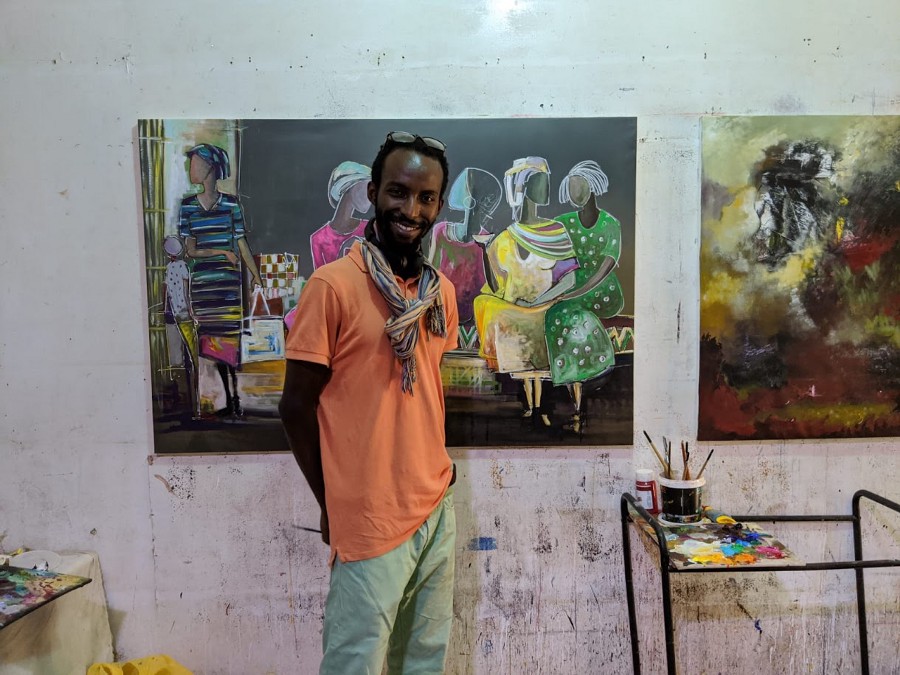
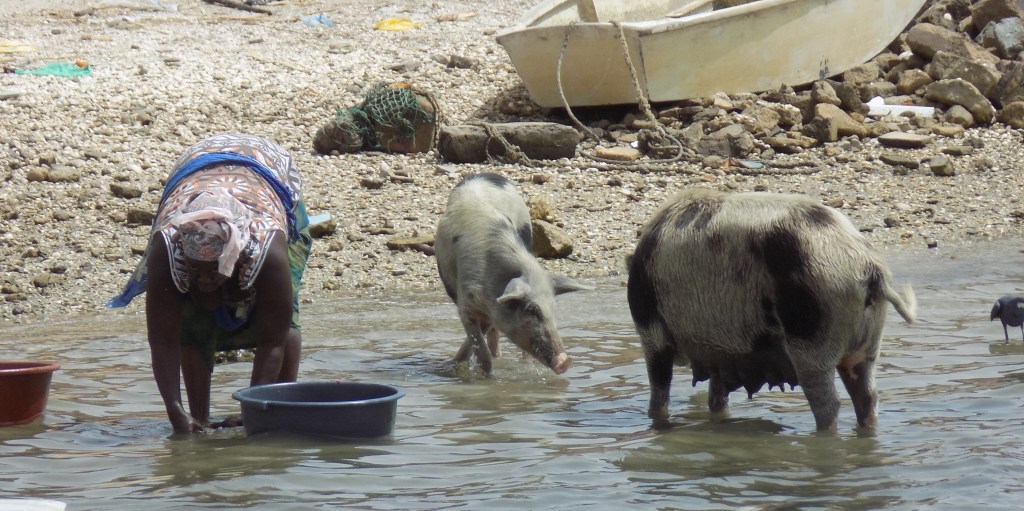
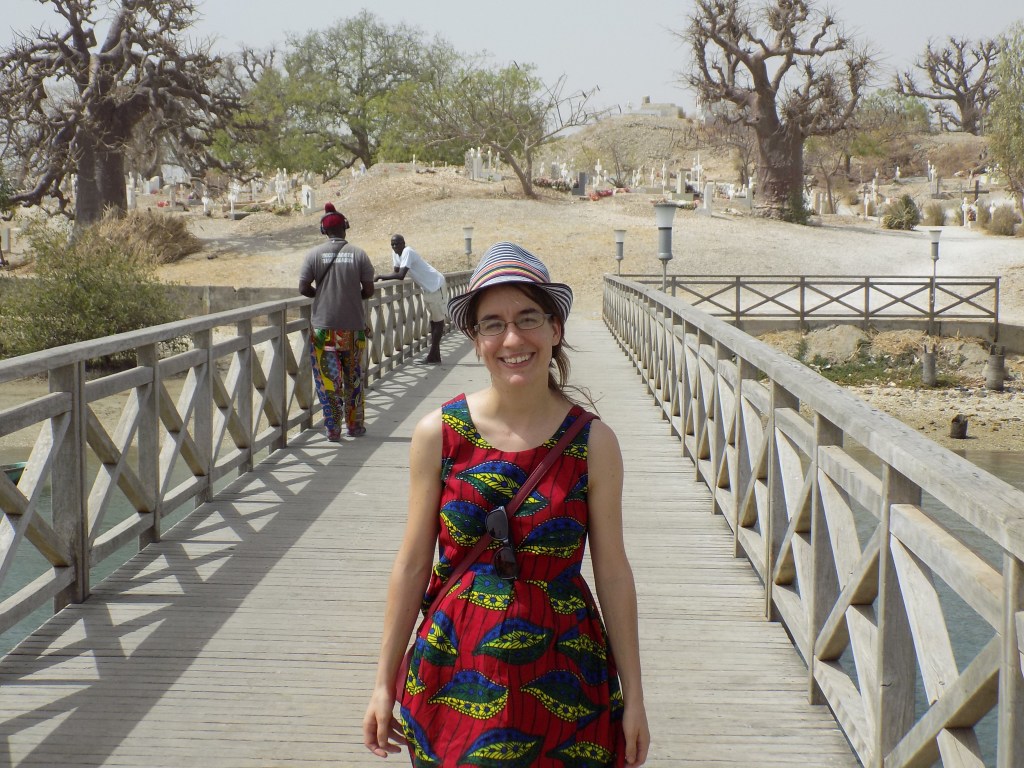

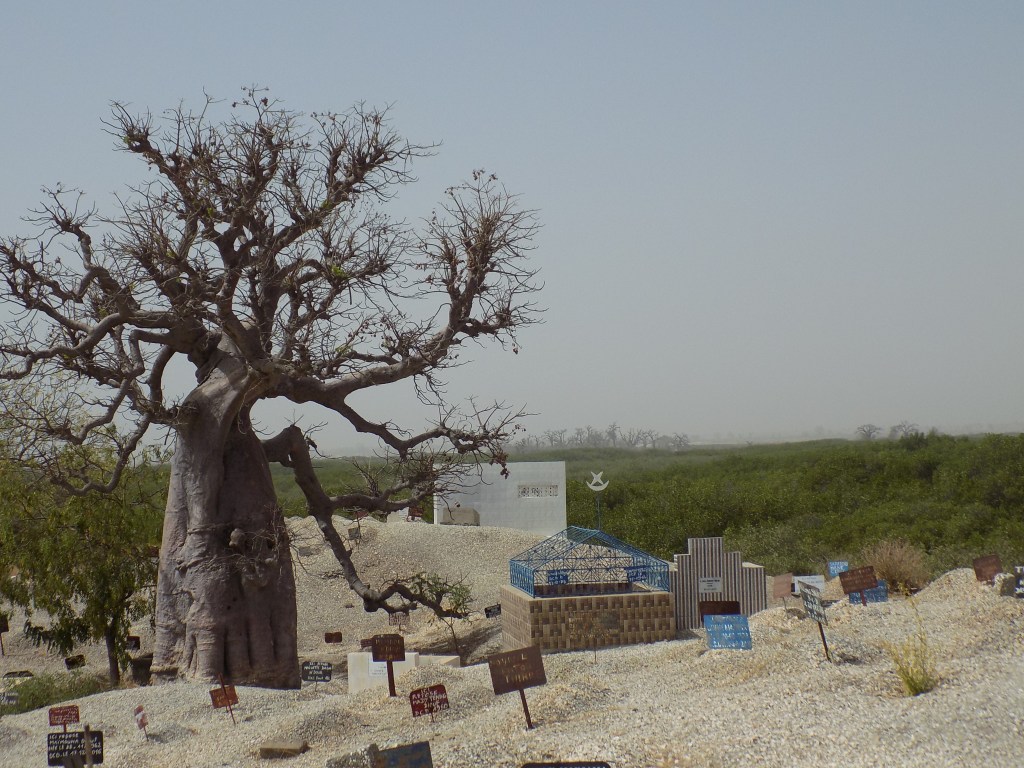
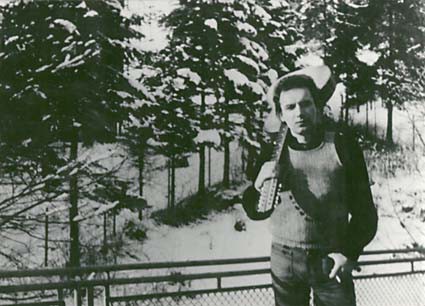



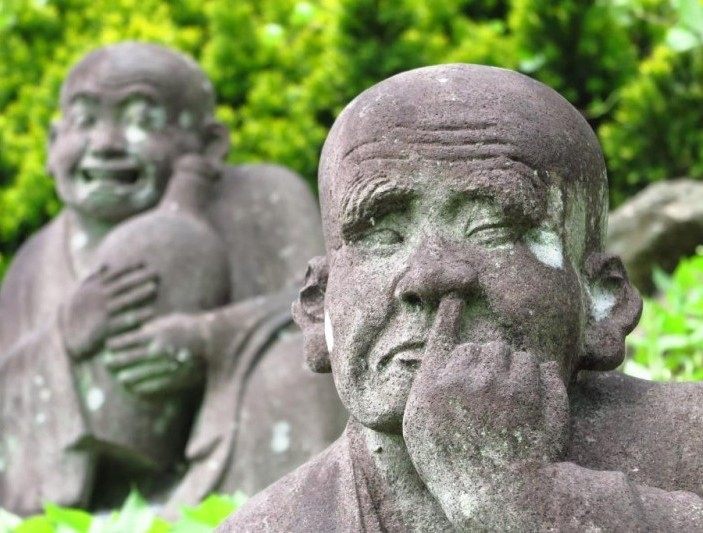
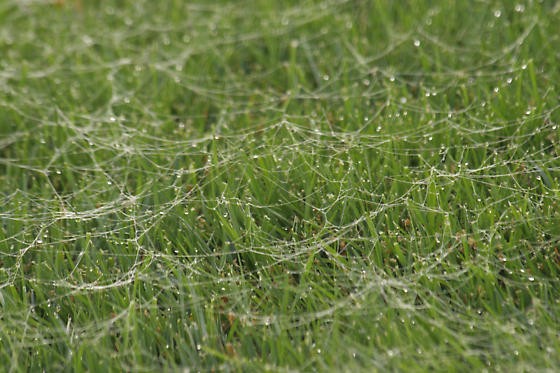

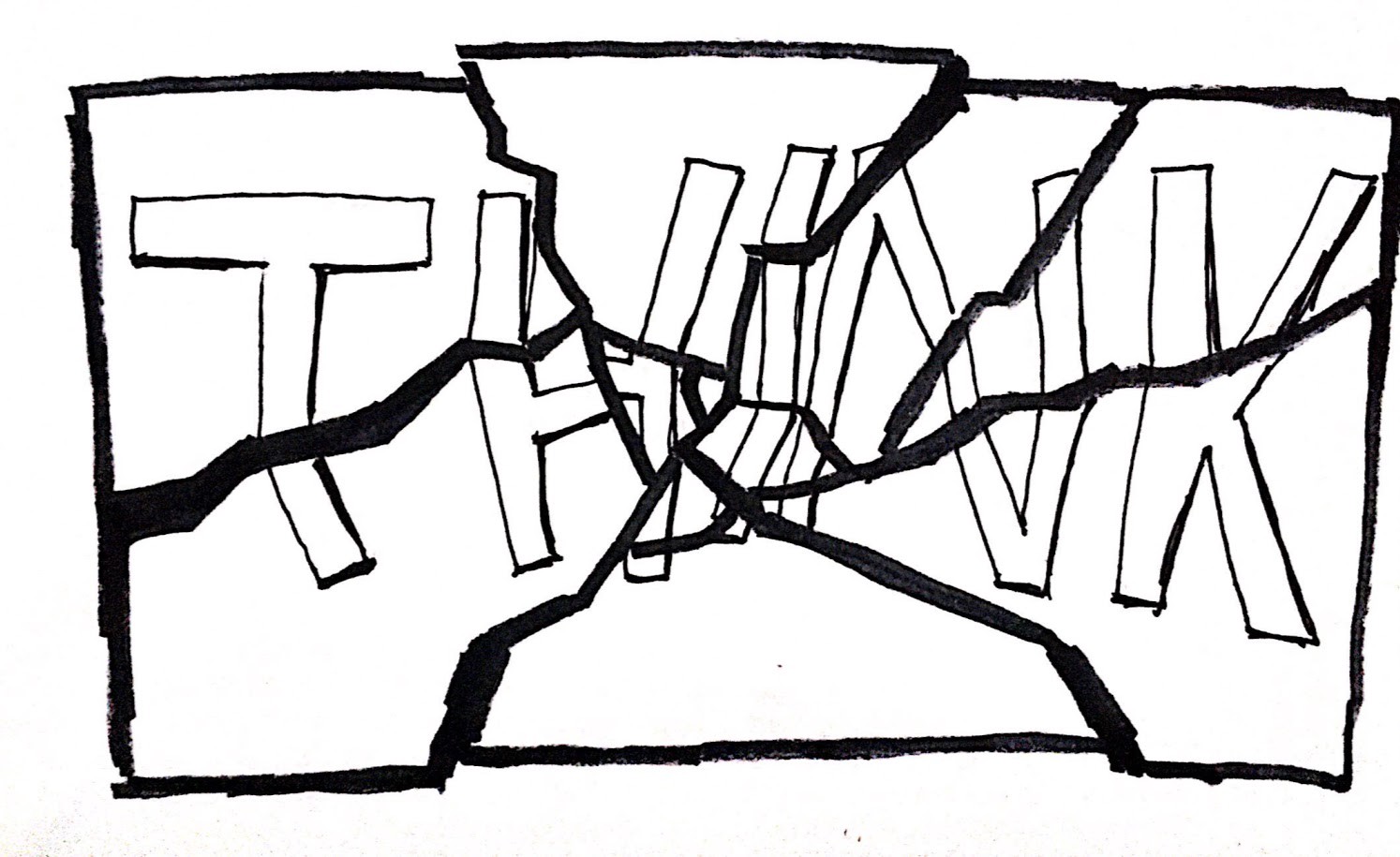 When I close my eyes to meditate, I see a dozen signs, broken into pieces.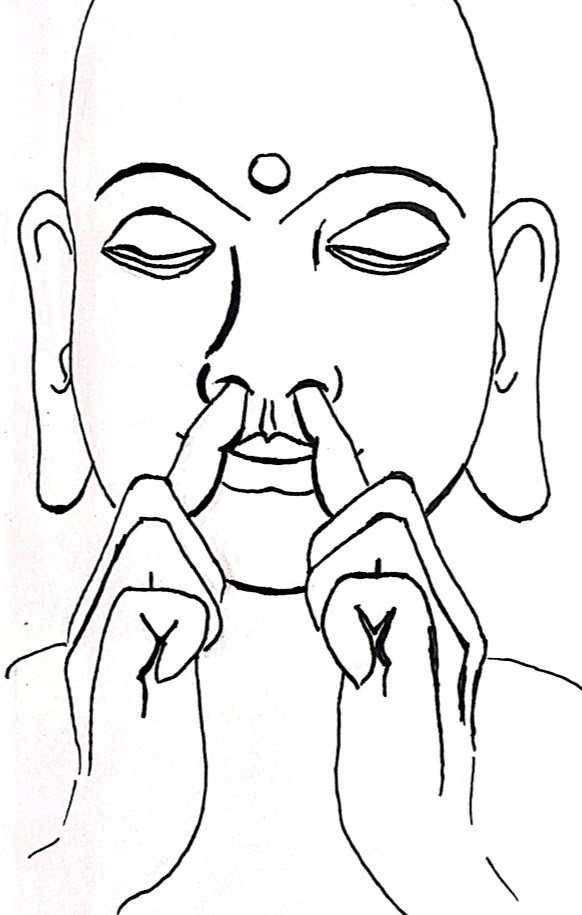

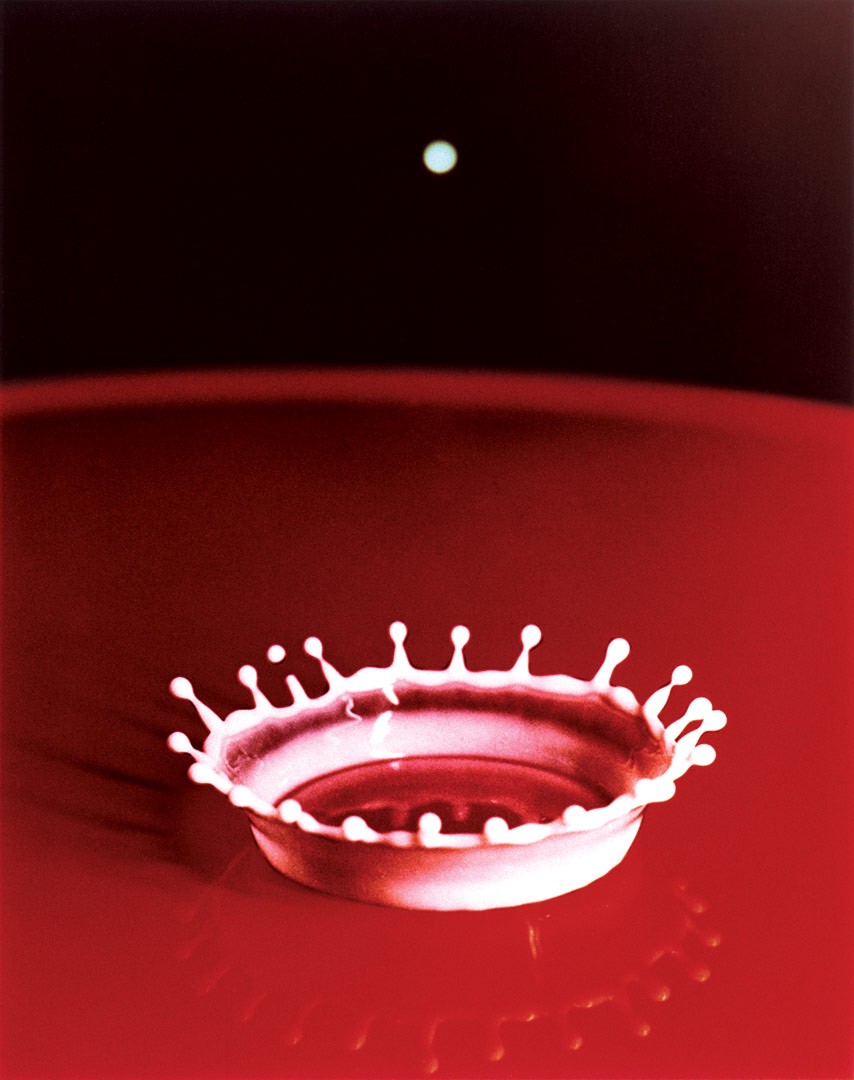
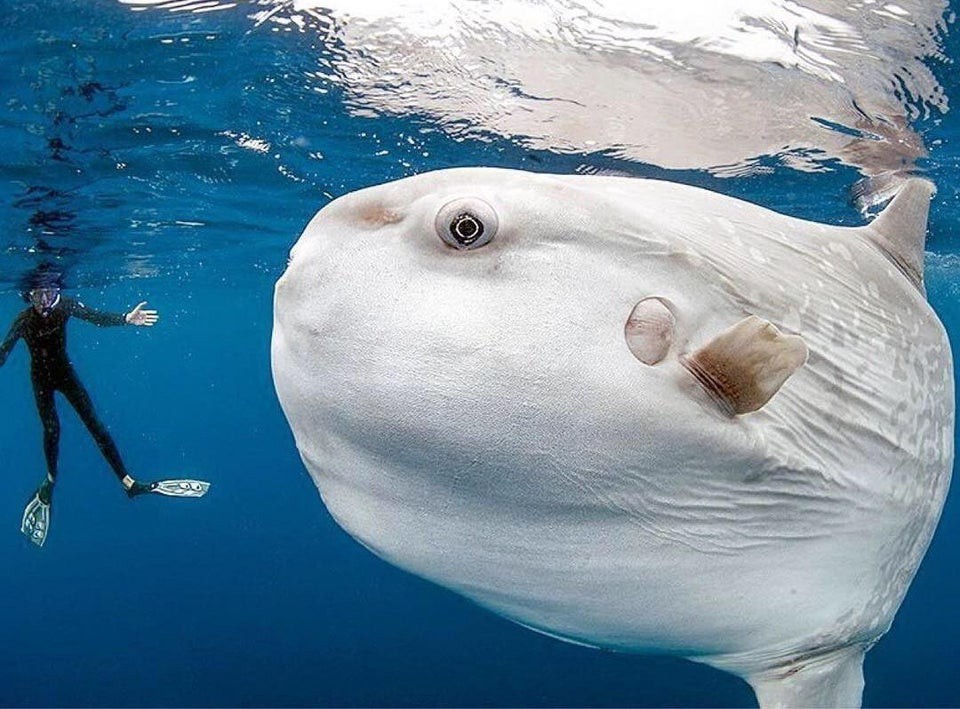
 Over breakfast, I am skeptical. What was yesterday’s great big insight? That I don’t need a purpose? I.e. that I’m an end in itself, not a means to an end? A human being, not a lawnmower? Didn’t I learn that in Philosophy 101?
 After breakfast, the lawn has strutted into high society. Each blade of grass, each thread of spiderweb wears its own freshly strung, limited-edition necklace. Clovers balance their pearls precariously on the edge of their hats, each arrangement more impossible than the last.
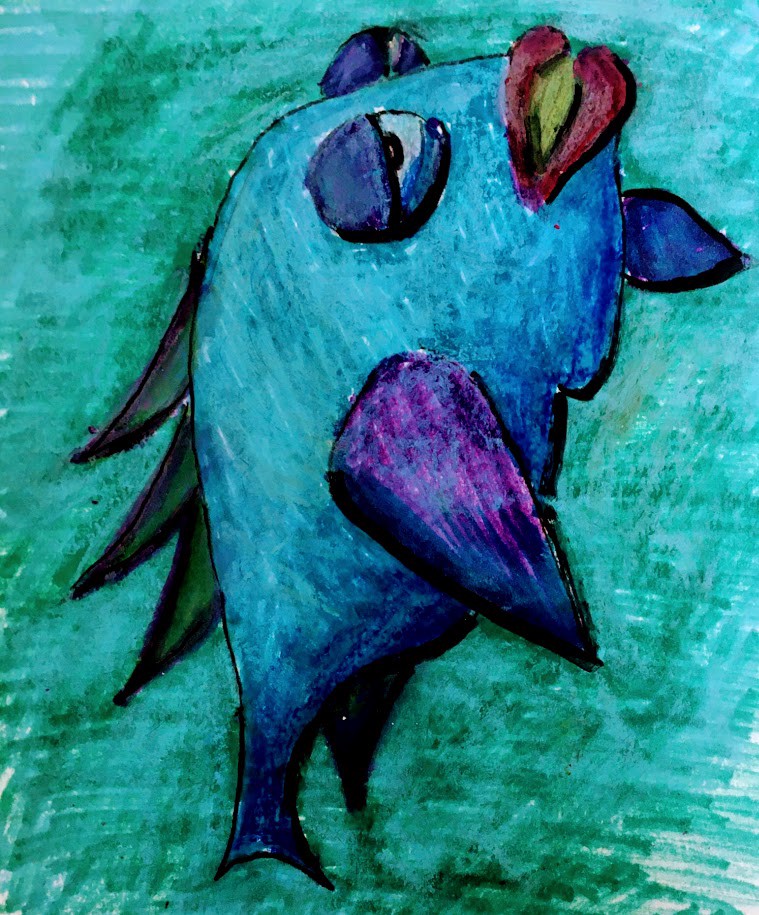 I see a derpy fish, slack-jawed, eyes half open, mouth pointed to the sky. It’s a perfect caricature: I’m meditating so intently that my eyes have rolled back in their sockets and my mouth hangs open.

 It’s the last session of the day, and I am collapsing with exhaustion. I give up, uncross my legs, give in to the warm woozy feeling.


 Sometimes moving to a new place means noticing more. You appreciate everything, take in the smallest details — the light falling on the river, the split-second delight on the face of the children passing by, holding ice cream. Your vision sharpens; you catch every nuance you would have missed at home.


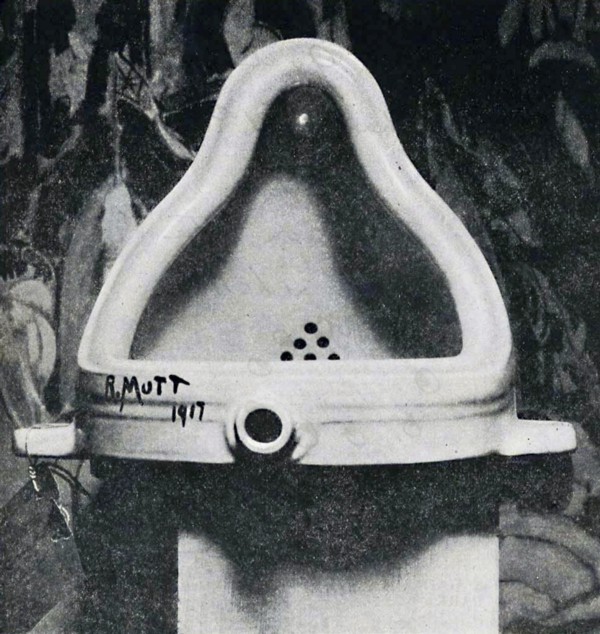


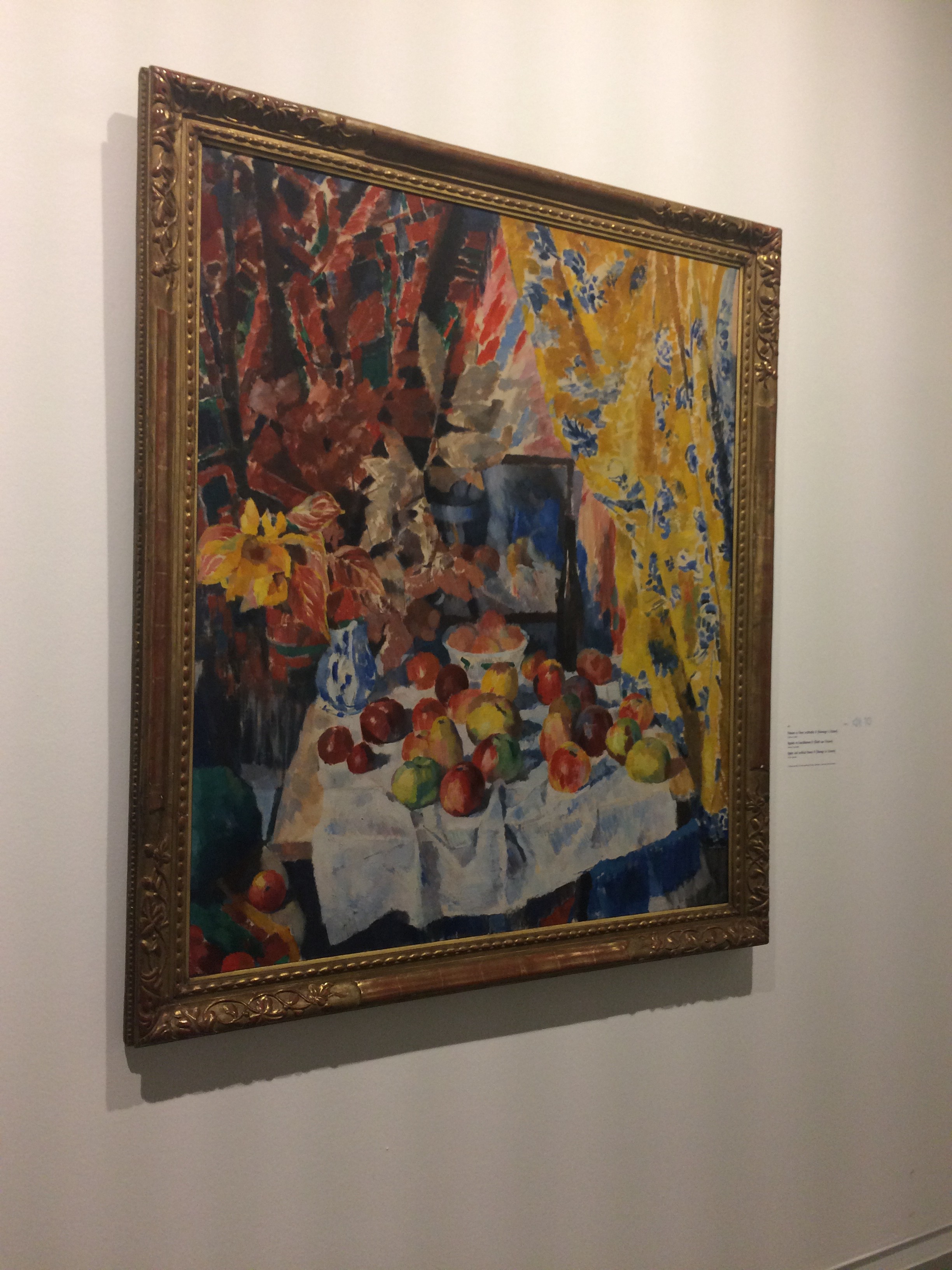
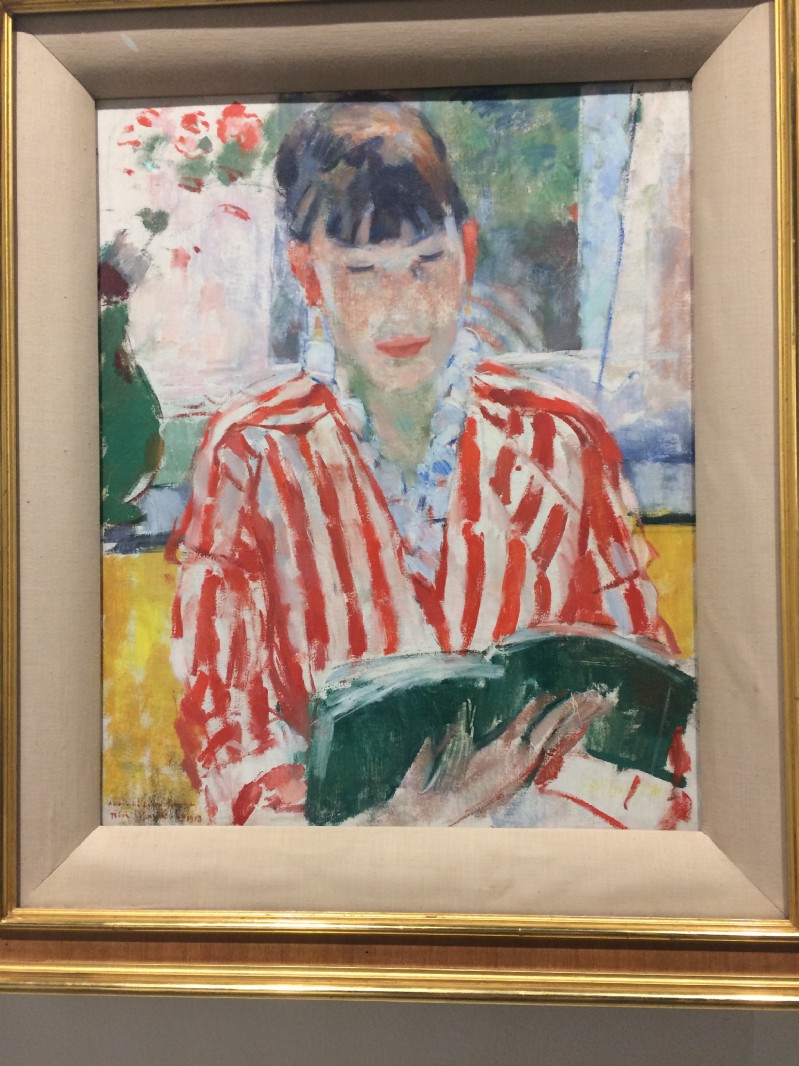

 Eve Bigaj
.JPG)